Saturday, 25 September 2010

Mention the war


These shoes have been around for as long as I can remember. They have moved from the bottom of one wardrobe to another but they are still with me, a relic of World War Two. Along with a copy of “Make Do and Mend” they are some of the ordinary things I own that are left over from an extraordinary period in Britain’s history.

Recently there has been considerable and deserved mention of the deeds of the RAF during the Battle of Britain. For those who now live in London’s suburbs it is hard to understand the degree of fear and danger experienced by the ordinary people who lived in those houses before we did. Here and there you will find structures, both overgrown and reused, that were built as part of the plan to defend the UK. There are of course memorials to those in uniform but very little remains to remind us of the impact on everyday life.


When I visited Medway Drive in Perivale I could see nothing to indicate that six people were killed and thirty others injured in this quiet street near the A40. I was looking for a gap in the terrace filled by a post war building. Mindful that a surprising number of that generation still live in the houses they were born in I looked for someone in the right age group and struck gold. I was introduced to someone who had lived in the area since 1935 and remembered the incident very clearly. A parachute mine came down here on the night of 25th September 1940 and King George and Queen Elizabeth came to inspect the damage. Photographs taken at the time show them striding up the street in the company of the mayor and local officials. I was amazed to learn that the damage was repaired straight away and found that one of those I was speaking to, a child at the time, had been paid a penny a day to brush clean the salvaged bricks for reuse. The houses in this street were then no more than three years old and I suppose restrictions on the use of building materials were yet to be imposed. It is now impossible to tell that anything so devastating happened here.

Within minutes we were talking about the difference between an Anderson shelter and a Morrison shelter, what it was like to hear a Doodlebug (apparently it was when the whistle stopped that people began to run in all directions) and how one milkman coped during an air raid. They remembered the spivs at the dog track and the people who did not survive. They mentioned the policeman who was not provided with a free shelter (he earned too much) and sent his daughters into the neighbour’s for safety. There were memories of particular raids and of a woman who turned up to work at Sainsbury’s in Greenford with bandaged hands, still trying to work out how they got burned as she rode along on her bicycle.


It was a frightening time. Huge craters were the reminders of near misses. One of my new acquaintances described how he was on a paper round when the warning went out. He rushed under cover only to feel a great weight suddenly crushing him. He thought he had been hurt but in fact a woman had seen him head for shelter and leapt in after him. His friend told me that on hearing a blast and unsure as to what to do he had stood rigid with fear while his sister dived to one side. He had every right to be terrified. Five days after Medway Drive suffered casualties six enemy aircraft dropped bombs in the vicinity of Mornington Road in Greenford, though they were in fact trying to hit RAF Northolt, their gunners taking the opportunity to strafe the ground. A six year old boy called Keith Peters was shot, one of thirty-seven people killed or fatally injured in the daylight attack. His home was damaged beyond repair and then targeted by looters. What must it have been like for his mother who after the war lived in the rebuilt house until her death? It is unlikely that the present occupant of this address is aware of its sad history. On a quiet day in suburbia, almost seventy years after the event, it is difficult to imagine the sudden terror that descended upon the people here.


I used to wonder what these mounds in Hanger Hill Park were all about. Apart from the lumps and bumps there is a concrete block at the end of one and a scattering of concrete squares that seal off the entrances to an air raid shelter. Again there is nothing to tell you that this was the site of several deaths in 1940. It seems that even for those who managed to reach a shelter there was no guarantee that they would make it through a raid. One of the people who died here was known to my friend in Medway Drive, a man who had thrown himself on top of his wife and succeeded in protecting her.

There was a matter of factness and absence of anger in these recollections from two men who would have had every right to feel bitterness towards the enemy. When I hear John Cleese mutter “Don’t mention the war!" and harangue his German guests in an episode of “Fawlty Towers” first broadcast thirty years after the end of the war I still hold my breath, aghast. It was meant to shock and was not aired in Germany when the series was originally shown there but I wonder how it would have gone down in the Britain of the 1940s?


Take a look at the archives of photographs from this period and you will see nothing but smiling faces. Land girls digging up potatoes in Greenford, in fields that have long since been built on. The mayor’s wife collecting clothes for the children of factory workers. A man sitting in the ruins of his house but beaming at the camera as if it was the funniest thing that had ever happened to him. Perhaps he was in shock or just glad to be alive, who knows? It is possible, even probable, that the less positive images were quite deliberately erased from some memories as well as from archives. Like shoes pushed to the back of a wardrobe the bad times were put to one side.

They kept calm and carried on, railwaymen, nurses and doctors, firemen, the WVS, shop workers who swept up the broken glass time after time, the makers of endless cups of tea and strangers who held a hand until the final moment came. Air raid wardens who must have seen things that gave them nightmares, bodies blown to pieces including those of people they knew. This former ARP hut which is at one end of Ealing Village now shelters bicycles.


In 1940 these people had no idea how many weary hungry years of war lay ahead of them. When it was finally over the world had been turned upside down and many saw this as an opportunity to put new ideas into practice. I wonder if we would have had the NHS if it were not for World War II? I hope that in years to come as much will be said about the valiant efforts of those who kept the home fires burning as has been said of those in uniform. It is up to us, the generations who gained from what they did, to recall and applaud their bravery and sacrifice.

For Violet, who drove ambulances during the war and was particularly fond of Marlene Dietrich. Thank you for the shoes.


I am indebted to my long suffering partner, who not only acted as chauffeur and advisor on military stuff but provided me with the excellent “Ealing, Acton and Southall at War” by Dennis Upton (The History Press), in which I found the information about the attack on Mornington Road.

Tuesday, 21 September 2010

Yellow and white


I had forgotten the part the Catholic church played in the early years of my life until I watched some of the coverage of the Pope’s visit to the UK. The last time I attended a mass it was a grand affair, a requiem mass for someone I knew, but I did it out of politeness. I am surprised to find that I can still remember the words of the “Our Father” and the “Hail Mary”. Two faded religious pictures, a collection of prayer cards, a rosary and the cross that my Portuguese grandmother gave me are the few things I have left to indicate that I was, and as far as the Vatican is concerned still am, a Catholic.

It is hard to avoid being one if you are at all Portuguese. In the past the church dominated the country and its people, especially the poor of whom there were a great many. When I asked why my aunt had never learned to read my mother said it was because she was too busy doing jobs for the priest. Make of that what you will.

In the last few years the British branch of Vatican Inc. has been sustained by the arrival of Polish believers but before then it was the Portuguese, the Spanish and the Irish who filled the gaps. Catholic rituals such as a First Communion are an excuse for a big party in these countries, a chance to show off. My mother couldn’t quite believe it when she saw that little girls were wearing net curtains as veils for the occasion - she wasn’t sending me out looking like that (I was probably the only little girl at our church who wore a child sized mantilla to mass on Sundays). A ridiculous amount of money was spent on a dress from Portugal, with lots of embroidery and beading, and I stood out from everyone else looking like a mini bride. It was the closest my mother has ever come to seeing me in a wedding dress and she certainly made the most of it. Imagine her relief when she found that the same dress would do for my confirmation (sans veil thank goodness), carried out at a time when little Catholics were processed like sausages in the belief that these ceremonies would keep us in the church.

There wasn’t much point in my case. By the time I was thirteen and attending a Catholic secondary school I was already brave enough to say out loud that I didn’t believe in it. Even being confirmed by Cardinal Hume himself at the grand London Oratory had made no difference. The church had lost me. Having an outspoken Protestant father didn’t help but my experience of Catholicism was for the most part a dark and oppressive one. Father Ted didn’t come into it.

The ritual I dreaded most was Confession. I was a well behaved child and could never think of anything to say. I didn’t enjoy waiting for my turn in the dark box, conscious of the priest just visible through the grille. One afternoon when I was about eight I refused to go and was dragged to church by my mother. I ended up making my Confession on my knees in front of a priest and my outraged parent. Very Edna O’Brien. Before this story confirms the stereotype of a child abuser I should point out that he was probably as embarrassed as I was. I doubt whether anything had prepared him for this, unmarried with no children of his own, living a relatively sheltered life. The villain of the piece was actually my mother who required my absolute humiliation. However the priest need not have colluded with her and I doubt whether she would have got away with it today.

This Papal visit probably had the same impact on Catholic schools this time around that it had on mine in 1982. Personally I was more concerned about what was happening in the Falklands. By this time I was one of a group of girls who contrived to avoid involvement in this or any other religious event and we got away with it because we were reasonably clever. Our A level results counted. Even so we were not the only ones who raised our eyebrows at the sight of a different clique who turned up with yellow and white ribbons in their hair. The ringleader was a recent arrival whose family had converted a few years before. The deputy head mistress was particularly excited and enthusiastic about them. It was all terribly Iris Murdoch. Like all newbies they were really dedicated and involved but one other put them in the shade.

She, along with the rest of her Scottish family, was a member of Opus Dei - Vatican storm troopers. When she discovered that I had a boyfriend she promptly invited me to the OD hostel she was living in while she attended the sixth form at our school. I say “hostel” but this was an elegant Edwardian house near Chelsea Embankment with its own chapel. Most of the others living there were Spanish and probably very well off. Any notion that she had asked me round out of friendship evaporated as one of her fellow tenants explained earnestly and in heavily accented English that she was praying for my soul as my situation had been explained to her. My “friend” then took me off to the chapel where she actually believed I would spend the afternoon helping her polish the altar silver. I’m still not sure whether this was intended as penance or fun. I left fairly quickly after that but not before noticing that the picture of the founder of Opus Dei, Josemaria Escriva, was bigger and more prominent than the one of John Paul II.

Just before I moved in with my partner to our suburban home I bumped into a priest I had known my whole life. I told him that I was moving away and he was polite but clearly shocked that I was going to be living with someone. By this time I hadn’t been to Mass for years. He reminded me that as a little girl I had mended a tear in his jacket, something that came about because my mother had dropped heavy hints about my ability to sew. He seemed very sad. It is men like him that I think of when the issue of child sex abuse is mentioned because they have all, innocent or guilty, been damaged by the failure of the Catholic Church to deal with it honestly and openly. The priests I knew were a very mixed bunch, including at least one eccentric war hero and another younger man who I now realise was an alcoholic. I once saw him cycle past the bus I was on in Fulham Road, red faced and the worse for drink. He was the only one I disliked. Priests and nuns deal regularly with the people our society shuns in a respectful and positive way and for that they deserve respect.

The impression I get is that many of those who could have listened to victims, including priests, lay people and parents, found the whole idea of sexual abuse so repulsive that they pretended it wasn’t happening in the hope it would just go away. Even those who told someone breathed a sigh of relief because having done so they could forget about it. Those who closed their eyes just weren’t brave and unselfish enough to do the right thing.

In my opinion the Vatican took advantage of this failing. An institution that historically wielded enormous political power and influence is now reduced to manipulating the little people who put coins in the collection box. Amongst the many good and helpful Catholics who are involved in education, health care and aid work around the world there are a proportion who have a selfish and damaging need to abuse physically and sexually. The Vatican has a responsibility to weed them out and hand them over to the civil authorities but those who follow Catholic teachings had and continue to have a responsibility to challenge those in the church. If Catholics worldwide had responded to allegations of child abuse in the same way that UK tax payers did to the news of MPs’ expenses, flooding radio phone-ins and newspapers with calls, emails and letters, the Vatican would have had no choice but to put their house in order. If only the bad apples had been tackled with the same ruthlessness exhibited by the Inquisition.

Unfortunately for those who would change it Catholicism holds such a strong appeal for some that it will be around in its present form for a very long time. I’ve got to admit that I find those who were demonstrating about the rights of women and gay people in the church during the Papal visit difficult to understand. Why would anyone want to be a Catholic if they feel this way? I can understand the desire to make the Vatican apologise for homophobic behaviour but I really can‘t work out why a gay man or woman would want to go anywhere near such an institution as a worshipper or priest. I can’t help feeling that it is in part those who continue to long for what they can’t have that keep the juggernaut going.

The issue that really turned me off was the ban on contraception. One afternoon I was out with a school friend when we bumped into a teacher we hadn’t seen for some time. The child she had with her explained the absence and she was speechless with embarrassment when she saw us. A single woman and a convert, she had been kept away from the school by the headmaster while pupils who became pregnant were allowed back. We felt that she was really brave to keep the child and bring it up on her own. It wouldn’t surprise me if she came under pressure to have the child adopted by some worthy Catholic family.

There were some attempts to encourage chastity before marriage including a memorable session with a misguided volunteer who believed she could persuade a group of Sixth Formers that it was worth waiting until we were married before losing it. We sat there fully aware that most of us were on the pill or buying condoms ahead of university. I suppose she was an improvement on a priest. I have always felt that it is unnatural to ask men and women to be celibate but expect them to advise those who are not. Having said that I believe that if being celibate is part of the deal when you are a Catholic priest it’s a bit like having your cake and eating it to be allowed into the priesthood as a married man, something that is on offer to Anglicans.

I have found it impossible to shake off Catholicism completely. Recently it occurred to me that if I came across a dying person who I knew was a Catholic I probably would ask them if they wanted a priest, perhaps even say a prayer with them, because even though I don‘t believe in it myself I recognise that it might be important to them to be able to die in a state of grace. When one of my partner’s relatives was involved in the invasion of Iraq we sent him an Ethiopian silver cross. Had the time been available I would have taken it to a priest to be blessed because that is what most Catholics would have done. An unblessed cross is just a piece of jewellery. I have even been known to light candles for people.

However, I am also an avid reader of horoscopes. I reckon the Vatican storm trooper would have me polishing altar silver from now until Judgement Day to make up for all that astrology. I last heard from her when I received a letter from Rome. I binned it immediately.

Tuesday, 29 June 2010

Two minute heroes


I turned up at the war memorial rather too early for the event, in company with a few others. Everyone else around us, apart from a handful who cast a curious glance in our direction, carried on doing all the things they usually do on a Saturday morning. The UK’s second annual Armed Forces Day had not been promoted particularly well in our area.

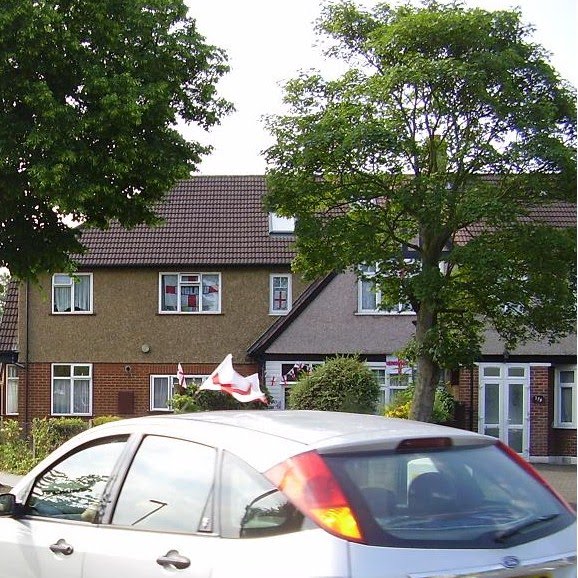
As someone waiting with me pointed out, it wasn’t for a lack of patriotism. The cross of St. George fluttered past us on cars and vans in the hot June sunshine. The World Cup had the lion’s share of the publicity and it was the three lions on football shirts that preoccupied most people rather than the young ones thousands of miles away under a different, hotter sun.


Perhaps things were not so different in 1921 when the memorial was completed, the money for it raised slowly almost reluctantly by a village that had lost nineteen men to the Great War. Perhaps it was too soon, too painful for some to cope with then, and again in 1945. Following both world wars there could have been very few people who did not know someone who had been in uniform, or recognise a name on a local memorial. These days it is uncommon to have a family member or friend in the armed forces so perhaps it is not surprising that there is a lack of awareness of such events. Most of us are left out of the loop.

Waiting for the parade I wondered how much the area had changed since veterans had first stood there one Sunday in June, 1921, before the plane trees had grown to such a height that they shaded us as we waited. They would have been a small group of local men, perhaps wearing suits made by the local tailor. A generation later that suit would have come from Burton’s, across the road, and after that it may have been a demob effort. The butcher, the baker and, in our case, the farm labourer took off aprons, put down tools and, during that two minutes of silence, became once more the young men that they had been, bound by shared experience, surrounded by the friends who hadn‘t come back. Then back to the Legion for a pint, memories carefully recalled and stored away again between Novembers.

“Ye who live on mid English pastures green,
Remember us, and think what might have been.”
War memorial inscription

Maybe it is because of them that we are so complacent and detached from current events. A lack of desire to brag, a need to return to “normality” as soon as possible in spite of the nightmares, a decision to take advantage of the prosperity that was coming their way and forget what had gone before. The Second World War largely disappeared with the tape that had been on the windows, but lingered on in army surplus and Utility goods which would do until you could afford something better. Perhaps it was both their gift and their fault that in the sixty-five years since the end of World War Two we have lost that everyday connection with the military.

Because when it did arrive that parade was such a grand and alien thing, pounding past the supermarket, the take away, the estate agents. We heard it before we saw it, loud and martial, and by the time it reached us, the glitter and snap of banners dismissing the mediocrity of everything about it, our hearts were probably beating in time with those drums. What a contrast with the slouchers in their football shirts, the girls in their summer clothes. It silenced the drivers stopped by the police and the teenagers on their mobile phones. In a world where we rarely stand up straight these people might have come from another age.


Yet however separate and different they may seem from the rest of us they still attract our support when we are afforded the opportunity to give it. The turnout for the main Armed Forces Day event in Cardiff was impressive and the words “Help for Heroes” are now seen and heard everywhere. A recent link up between a national radio station and the British Forces Broadcasting Service led to the posting of thousands of goodwill messages on their website, more than they could cope with. It isn’t the average person’s fault that this year Armed Forces Day had to compete with the National Squad for the average person’s attention.


Since then En-ger-land have lost a match and are out of the World Cup. Most of the flags will come down, although some will be left to the mercy of the elements. The team will fly back to a less than joyous welcome and scrutiny that will last considerably longer than two minutes. In the meantime, far away and out of sight their less well paid contemporaries will continue to watch dusty children score goals with bundles of carrier bags or plastic containers, as they have on many other postings, and dream of coming home.


http://www.armedforcesday.org.uk/
http://www.warmemorials.org/

Tuesday, 22 June 2010

The last bad smell


I’ve been trying to remember when transparent rubbish bags were introduced on London’s transport network. Definitely before the most recent terrorist incidents and therefore a consequence of Irish nationalist activity.

Strange that they were the first things that came to mind at the news that the Saville Inquiry had released its report on the Bloody Sunday incident in 1972 when members of the 1st Battalion The Parachute Regiment opened fire on a civil rights march in Londonderry, in Northern Ireland. They are one of the small things in daily life changed forever by those seeking to unite Ireland through violence. In theory they make it more difficult to hide an explosive device amongst rubbish.

Thirteen people were killed and another thirteen wounded, one of whom died later. The Widgery Report, released eleven weeks after the incident, concluded that the soldiers involved had fired first, believing that they were targeting people who were shooting back at them or handling explosives, and that their orders justified this. The report was regarded as a whitewash by many. Bloody Sunday was rather like a festering bag of rubbish that no one wanted to tackle, a persistent odour clinging to the Parachute Regiment. Thirty-eight years later, and at a cost of over £190 million pounds, those killed and injured have been declared entirely innocent.

It occurred to me that this incident took place when I was six years old and that it has taken most of my life for the arguments over Bloody Sunday to be resolved to the extent that it has. It isn’t over yet. Those who were serving with 1 Para and fired those shots on Sunday 30th January 1972 may be prosecuted over the deaths and injuries. It will come as a surprise to some if the families affected don’t pursue prosecutions and a disappointment to others if they do. The phrase “water under the bridge” has been used more than once which suggests to me that some people have no sense of smell.

The release of the Inquiry’s findings have meant that much of the footage that was recorded by news crews at the time has been replayed over and over again. The same images of a man waving a bloodstained handkerchief as one of the victims is carried past soldiers have been shown on TV every time that the events of that day turn up in the headlines. It takes me all the way back to childhood and the blurry memory of fear that I have, of being dragged out of Marks and Spencer by my mother because of a bomb scare and a cold ride home on a bus afterwards. A fragment of childhood frozen in black and white at a time when everyone seemed to wear roll neck sweaters and needed a haircut.

Over the next decade I became a little more blasé about these things, IRA activities went with the territory if you lived in the capital, at least that was what we told nervous visitors. But there is a limit to just how relaxed you can be when faceless people are trying to kill you. On the 20th July 1982 I was at home, near Hyde Park, when a bomb went off killing two members of the Household Cavalry and injuring twenty-three other people. Which of the seven horses killed or injured beyond recovery had woken us on early mornings with the sound of their hooves in our mews? The house shook just as the ground did when one of the big piebald drum horses stamped past me as I walked to school. You always know when it’s a bomb.

It’s called terrorism for a good reason and fear was certainly in the air following these events but anger came straight in after it. No one was happier than this nine year old when the Birmingham Six and the Guildford Four were locked away. As far as I was concerned the police had done their job and they could be relied upon to get it right.

Imagine my anger when some protested that these convictions were unjust, that those accused were innocent. On an anniversary of the Birmingham pub bombings the sister of one of the victims described the impact the event had on her mother, driving her to mental illness, and the anger she felt towards campaigners for the Birmingham Six. Seeing a classmate pale with shock and bearing marks on her face from splinters of glass after the Harrods bombing didn’t help. Another lost a brother to a bomb and the school held a service for him. The irony was, of course, that he had been of Irish descent, as were many of those affected by these incidents.

I didn’t realise, until I discovered the extent of my own Irish ancestry, just how my opinion of Ireland had been skewed by all this. I felt uncomfortable about being that Irish. It came as a shock to realise the impact on me of the years of fear and bitterness worked up by people who had denied me the right to walk freely and without fear in the place I called home. It hasn’t made me a nicer person so it doesn‘t surprise me that some who grew up surrounded by checkpoints and guns in Northern Ireland feel the way they do about the British army and the police.

Over the years I have heard lies told by a number of British policemen being unravelled and shown for what they really were, in relation to a number of miscarriages of justice. To me the greatest betrayals were the wrongful convictions of the Birmingham Six and the Guildford Four. One lie after another exposed, undermining the certainty I felt about the justice system -and it hasn‘t made me any less angry about the impact of terrorist activities on my life.

I am lucky not to have lost a relative to a bomb and I cannot imagine what it was like not only to have loved ones killed but to have seen them branded as terrorists when they were entirely innocent. There are those who wince at the cost of the Saville Inquiry and dread the prospect of more time and money spent on prosecutions. It is too much to hope that those involved in the shootings will come forward now and ask a court to decide the truth on way or another but that is what I would like to see. It isn‘t just about the relatives, who have waited such a long time for this outcome and have done so with more grace than the judges, politicians and military in whom I had such trust. I would like to see this last scandal cleared up. If the people of Northern Ireland had allowed the setting up of a truth and reconciliation commission of the kind that helped the people of South Africa comes to terms with their past we might have been spared this lingering embarrassment.

The Parachute Regiment has proved itself since those dark days and continues to do. It was 1 Para that spearheaded a peacekeeping force in Kosovo in 1999. It was 1 Para that took part in a hostage rescue in Sierra Leone in 2000. Those who wear that badge today are very different from the soldiers who shot at those civilians in 1972.

The situation must be resolved in a court of law rather than being left to fester like a rubbish bag on a hot day, surrounded by persistent wasps, with no one prepared to risk the sting of costs and the stink of embarrassment to get rid of it for good. In my experience, rubbish bags leak if they are left too long. It is almost inevitable that those involved will eventually speak about Bloody Sunday and death bed confessions will bring no peace to those whose relatives were frozen in time.


Tuesday, 15 June 2010

Fallen from grace


A few nights ago we were woken by the pained screeches and howls of two foxes getting it on somewhere very close to the house, until recently one of the less notable sounds of suburban life. On this occasion I would not be surprised if a few of our neighbours had got up and checked that they had locked the back door and shut all the downstairs windows.

The fox has is no longer seen as the charming redhead that you help out over the winter with the odd bowl of cat food. Tabloid headlines have put Mr. Fox into the same category as the paedophile. He is no longer fantastic. A mother found a fox mauling her twin baby girls in their nursery after it entered her north London home through patio doors left open on a hot night. Since then the local council has set traps in the garden of the house and destroyed three foxes caught there subsequently.

A number of Londoners, among them the mayor, Boris Johnson, have come forward to declare that foxes are vermin, a nuisance and now, a potential danger. The surprising thing is that just as many have stood up for the fox, pointing out that London and its suburbs have become a free food fest for vermin of every kind. It is not just the kind hearted residents of the city who are to blame. Patrons of take away food establishments do not feel the need to dispose of whatever they have left over responsibly, dumping it anywhere; proprietors leave bags of rubbish in the street long before collections are due because the fines are never big enough to put them off. Add to that the introduction of fortnightly rubbish collections for reasons of economy and it is hardly surprising that the fox and the rat have flourished.

In spite of what has happened I am quite happy to see foxes in our garden. If we keep the doors closed on hot evenings it is because we are worried about the two-legged variety of visitor, the burgling kind. I heard the eerie shriek of a fox for the first time in the suburbs, believing at first that it was a woman’s screams. Then it almost sent me into orbit but I now know that one of nature’s charmers is about. And I have been charmed by the fox. The sight of cubs tumbling over each other on the lawn, of an adult sunbathing on the compost bin, of another loping purposefully along the street ahead of me, I still regard these moments as special, magical. If those strange and dangerous eyes have once looked back into yours from a safe distance they are hard to resist. For those as divorced from wild nature as some town dwellers are it must be hard to resist trying to turn such a creature into a friend with the help of frozen chicken.


My perspective had to change once we became cat owners, not actively discouraging them but the occasional bowls of cat food stopped (I once economised by providing cheap dog food and was treated to the sight of a fox having a sniff and then walking away from it. Everything in its demeanour said “You expect me to eat this?”). We do leave out bowls of water, shallow enough to prevent a hedgehog drowning or tilted to allow an easy escape, that double as a lido for young starlings. I began to do this after seeing a desperately hot and exhausted fox take a rest on the patio. It was too frightened to let me put water out for it and ran off.

There was one hairy moment when I glanced out of the kitchen and saw a large fox standing stock still on the lawn with our beloved moggie right next to it. To my amazement the fox ignored Jones as he began to lie down next to it in a submissive gesture, the one that told us that he was due for a tummy rub. By this time my hand had rattled the doorknob and the fox departed in a hurry. Jones didn’t look too unhappy to see me but he didn’t seem frightened either and it has led me to wonder what sort of relationship he had with foxes in his early life as a stray. Most cats don’t win the argument. Nevertheless, when I found three young ones gazing at me expectantly through the French windows one Sunday morning I thought of Jones, at that moment snoring under the duvet, and resisted the temptation to slip them a dish of Felix.

I don’t blame foxes in any way for the problems they cause. They are fulfilling their role in the ecology, scavenging and cleaning up after everyone else and it is not their fault that we provide them with so much work. However I believe that for some the feeding of foxes has more to do with a need to be loved by an outlaw than a genuine desire to help wildlife. We have forgotten that this adaptable survivor has been charming humans for centuries. Very few animals have engaged the attentions of artists, writers and poets in the way that the fox has. Brer Fox, bold Reynard, Disney’s Robin Hood, Beatrix Potter‘s “foxy-whiskered gentleman“ and The Tod in “The Plague Dogs” by Richard Adams, from Aesop’s Fables to Roald Dahl it has been recognised as cunning, sly, deceitful - the Loki of British wildlife. Most recently the fox has been equated with the scheming young women drawn to celebrities in the video for Wiley’s “Wearing my Rolex”.

Perhaps those living within the town walls would be slower to defend the fox if their livelihoods depended on it. The playfulness that leaves our back garden strewn with shoes, rubber ducks and sparkly Christmas baubles is the same as that which leaves a hen coop in a bloody and distressing state. There are those, parents in particular, who have come to understand that a patio covered in faeces is a high price to pay for a glimpse of something wild.

It is time for the authorities, in consultation with local wildlife trusts, to take a rational and sensitive approach to the urban fox, educating the public in the best way to interact with it and acting in all our best interests. A blanket approach which treats all foxes in the same way would be inappropriate, what we need is a fox czar.

The recent incident really worries me. I fear that it will be used by politicians to gain votes by hitting an easy target rather than tackling obvious litter problems and dangerous dogs that Londoners fall victim to every day. Another concern is that the tabloid reaction to it will give permission to thugs to torture and kill foxes. They will use the same dogs that I worry about to carry out this task and then celebrate with a take away. One of the saddest interviews I heard following the attack was with a teenager who described the foxes in her area as scruffy, clearly unaware that sarcoptic mange causes these animals real misery - it isn’t because they are too lazy to groom themselves. Ignorance of this sort leaves the door open to cruelty.


Unfortunately, thugs on the other side of the argument have also made their feelings known online and the family in question have been given police protection. I have no doubts about the truth of what happened and wonder how those who care so passionately about animals in general can be this unfeeling towards the human kind.

I wonder if, by treating the urban fox in this way, we have worn away some of the mystery that drew us to it in the first place. As a result of our affection it has become commonplace and ordinary. We have lost our innocence having denied it the dignity due to it and our fall from grace is all the harder for it.


http://en.wikipedia.org/wiki/Reynard_cycle

Saturday, 16 January 2010

Too much of a good thing


At last, the thaw. When, unusually, it began to snow before Christmas it added to the festive atmosphere. For once the weather outside matched the images on the cards indoors. It rapidly lost its appeal. London was bored of snow. Every local phone-in show made that very clear.

The problem is that the British don’t have to deal with it very often so we are left in total disorder on these rare occasions. There is a desperate rush to spread grit and salt on main roads (but not residential side roads, leading to many complaints) and panic when they start to run out. This year there was outrage when the snow turned to slush after it was rained on, creating a slippery treacherous mess on station platforms and pavements. It turned out that grit had been spread but the rain had washed it away. The slush then became icy and even more slippery. I saw one man slip over on the steps at North Acton Station before Christmas, hitting his head on the metal edged steps.

Judging by the state of the pavements in West Ealing this week I think I know where most of that grit ended up. A shame that some of it didn’t reach residential Greenford or the business district in central Ealing.


New snow is special. I love the way that it reflects the light and muffles every sound, especially at night. It’s easy to walk in (crunch crunch) and renders everything beautiful. It even managed to lend a quiet beauty to the place where a good man met a violent end a few months ago.


When the snow first hit the UK it was regarded as lovely, if a bit of a nuisance. I was obliged to head out in it and couldn’t help smiling at everyone I encountered. And everyone smiled back. It was a lot less fun hours later when there had been a slight thaw and even worse when it had refrozen. I watched a pensioner pass the house, holding my breath in case he slipped over.

I considered (along with many others according to the media) whether to sweep the pavement in front of the house for the benefit of those passing by. A good citizen would surely do it. My main concern was that I would not clear it well enough to prevent a thin layer of moisture refreezing and leading to the problem I wanted to avoid. In the end I left it as it was because I had found that it was easier to walk on the remaining snow and frozen slush, especially if it snowed again.

Extreme cold (by UK standards) leads to a rush on hats, scarves and gloves in the shops (I’ve made three hats since Christmas), an abandoning of New Year diets in favour of warm comfort food and a rediscovery of things like hot water bottles, and balaclavas. Personally I recommend lemon and ginger tea with honey. It has been difficult for birds, who can’t find food under the snow, and the local foxes were louder than usual and probably very hungry.


An unexpected fall of snow last February led to a small snowman in the front garden complete with carrot nose and apple eyes. This time around I find it hard enough to get to and from work on it to have the energy to play around in it which is a shame because it didn’t snow very often when I was a child and I could do some catching up. I spent many childhood Christmases in the countryside and one year (the forecast promising snow) I was given a plastic sled. The worst present ever as the snow failed to materialise.

Now that things are back to normal it is interesting to note what this episode has revealed about the UK. Many schools remained closed because even though the pupils live in the area, their teachers do not (house prices are often prohibitive). Pensioners will leave the house to go shopping but many of the younger generation will have a duvet day. A lot of people don’t own the right footwear for ice and snow. The news channels are more likely to interview the RSPB about the impact of cold weather on wildlife than Age Concern about its impact on the elderly.


In the meantime, while we’re bothered about snow, on other parts of the planet we call home extreme heat continues to take its toll and one of the terrible natural disasters that always seems to follow Christmas leaves its mark on Haiti. The fun’s over.


http://www.dec.org.uk/donate_now/
For Robert Godrey, in the hope that the sight of all that snow cools things down.

Wednesday, 30 December 2009

"Made in China" - we helped to build this bloodstained brand


Akmal Shaikh was executed on Tuesday 29th December 2009. China defied international opinion by ordering the judicial murder of a man who was clearly mentally ill.

Despite twenty-seven separate approaches by the government of the United Kingdom China decided to pursue without exception its policy of executing those found smuggling drugs. While I condone most strong measures against those who deal, smuggle and use illegal substances (they are beneath my contempt) the case of Akmal Shaikh highlights the fact that a) the imposition of the death penalty does not put people off trying, and b) he was so obviously duped into carrying four kilos of heroin into China that the police would have been better served by getting as much information from him about those who shamelessly manipulated him in this way than by arresting him.

It would appear that mental illness is a foreign disease, the Chinese clearly aren’t afflicted by it because the fact of Akmal Shaikh’s condition played little if any part in his defence. The court officials found his behaviour quite funny. I’m not laughing. China has given no cause for humour for those who suffer at its hands and I believe the time has come to speak plainly about its impact on the world. The time for diplomacy is past.

What do you think of when you hear the term “bear farm”? Allow me to enlighten you. The Chinese have a medieval, no, let’s call it stone age, belief that there is something to be gained by keeping live bears in cages so that they can drain their bile ducts and use it for something allegedly medical (God knows what – keeping a hard on probably). Bears live and die in these disgusting conditions, suffering infections and endless pain and misery. Imagine living your entire life in a cage, unable to move, lying in your own faeces, surrounded by the heartless monsters who get paid for doing this to you. The Chinese fascination with bears leads them to engage in the hunting of the rare Asiatic variety in Russia because in the restaurants back home morons are prepared to flash their cash by paying a small fortune for bear paw soup.

All this is in addition to the suppression of the free press and the ill treatment of those who dissent. As for unwanted female children and those with mental illnesses or learning difficulties, Bryan Woods and Kate Blewett exposed what happens to them in their documentary “The Dying Rooms” (1995). There is a saying in China: “A family’s shame should be kept inside the house”, out of sight, out of mind. The bears should probably count themselves lucky. I have heard some environmentalists praise the efforts that the Chinese government have made to promote sustainable communities. I sometimes wonder if these people are living in an ivory towered development near Shanghai – what about the rest of that great big picture?

For years I have heard diplomats and businessmen describe how difficult it is to deal with China, how cultural differences and a need for extreme sensitivity governs every contact. The strange thing is that, while they have been walking on eggshells around these proud and supposedly dignified people, the Chinese have been filling the shelves of our shops with products made in their own country. Our schoolchildren have been learning Mandarin because China is going to dominate the world stage and we have to be ready. I hate to tell you this folks – I think we’re a bit late.

So far the murderous and arrogant regime in the People’s Republic of China has sucked up the Olympics because they were considered to have changed their ways in relation to human rights. They have attracted companies from around the world who want cheap labour so that they can keep their shareholders happy by increasing the profit margin through the exploitation of dirt cheap labour in China. And we have paid the price.

Across Europe and America workers now face the constant threat that the companies to which they have been loyal for years may decide that they are too expensive, that they would rather ship the whole operation to China. The consumer has been complicit in this process because for a long time we have been enthusiastically buying it cheap.

Can you remember the first time that you saw a t-shirt in a supermarket, price £1? And you thought “Great! I’ll buy one in each colour!” It didn’t matter that they shrank or faded after one wash – you could go back and buy another. The problem is that we have now been conditioned to buying cheap to the point where any similar items that cost what they really should are now considered to be ridiculously expensive. We used to give a damn whether these clothes were cheap because they were made by children – how many of us saw the words “Made in China” on the label and cared?


In the meantime the industries for which the UK was well known have been eroded, eaten away by our desire to pay less. We no longer save up for the good stuff. Instead we thank China for providing what we can afford. When I was a child you bought carefully and less often, you made things last. All those lessons have been forgotten because of an over developed sense of entitlement. We want to save money on the goods we need so that we can spend them on the things we want, things that are also made in China.

A few weeks ago I watched the news reports from Cumbria where floods had devastated lives and the local economy. I was reminded that areas such as this were once the source for some of the best quality wool in the world. I have noticed that many yarn brands that are regarded as British now make their products in China. Small wool producers in the UK barely survive because those who knit and crochet take the easy option and buy what they find on the shelf, wherever it is made (it is time that the Fairtrade logo appeared on British brands of yarn so that producers receive a fair price for what they make in their own country). No effort is made by the UK’s government to encourage the sale of British yarn and other products in its own country over those made in states with poor human rights records.

In the meantime I see no other course but to encourage retailers to stop stocking Chinese made goods. A determined, long term effort on the part of the British consumer would be more effective than the actions of diplomats and politicians. It will be difficult, especially for those on a limited budget because we are reduced to buying cheap Chinese tat. Cheap British tat has been eliminated. It will be even harder because life is about to become more expensive anyway.

I call on anyone who cares to think twice before buying goods made in China. Please go even further and contact large retailers such as Tesco, IKEA, WH Smiths, Next and Marks and Spencer. Tell them of your concerns about China’s record and ask them to stop stocking Chinese made goods. Copy your letters to your Member of Parliament and local councillors. Tell your local newspaper.

It is up to us to vote with our feet, we have left it to the politicians for too long and I believe that they have let us down. Now it’s our turn to let China know just what happens when they break the rules by unjustly punishing the vulnerable.

http://www.hsus.org/wildlife/issues_facing_wildlife/wildlife_trade/the_unbearable_trade_in_bear_parts_and_bile/
http://news.bbc.co.uk/1/hi/world/europe/8429708.stm
http://news.bbc.co.uk/1/hi/world/europe/8432212.stm