Showing posts with label veterans. Show all posts

Friday, 4 March 2011

Small society


Something happened last week that brought to mind the Prime Minister’s continued efforts to explain his concept of the “Big Society” .

I was at the small parade of shops a street away from my home when I spotted a young woman, wearing the kind of long skirt favoured by Roma women, standing very close to an elderly man with whom she was deep in conversation. I didn’t think anything of it until I happened to look that way again and realised that I could see banknotes. Sometimes you just know that something isn’t right and as I was in the mood to take notice I walked up to them and asked what was going on.

By this time I was less than two feet away and could also see a substantial gold chain which I automatically grabbed to keep it where it was. I couldn’t tell which direction it was travelling in but in the seconds I had my hand around it I realised that it wasn’t the heavy gold necklace it appeared to be. I know metallised plastic when I handle it. The girl was startled and pulled it away from me but I had reached them in time to see that she had been taking more and more five pound notes from him. Over her shoulder I could see a man and another girl standing a few feet away, clearly worried at my intervention.

Something about the girl I was standing close to threw me, she seemed so frightened. I couldn’t work out exactly what was going on so I backed off and left them to it but by the time I had dealt with my errand I realised that I should have been firmer with her and told her to get lost. It was too late. All those involved had disappeared. I asked a shopkeeper if he had seen anything and was given one of those answers that makes me despair. Yes, some people had been trying to sell fake gold jewellery in the street, especially to pensioners. There was no point telling the police because by the time they arrived they would be gone. That was the mindset of every person I told in the minutes after it happened. When I mentioned it in another shop and said that I thought those involved might be Roma someone asked me what my nationality was. The suggestion was that to point out their ethnicity was to be racist, even though that is the sort of information the police would have asked for.

Looking at it now, days after the event, it occurs to me that what happened in the small space between the three of us brought up some really big issues. That young woman represented centuries of persecution and discrimination. As a citizen of the European Union she is of monetary value to her family in that she can be married off to someone who wants the right to live in the UK and is prepared to pay for a wife. She wouldn’t keep the money she was making by selling jewellery, it would be passed on to someone else, possibly along with any she managed to acquire through the benefits system and was actually entitled to.

The man being conned was clearly a veteran, of an age to have fought the fascists who murdered as many as 600,000 Roma. His reward was to be ignored because no one seemed to have noticed what was happening to him. Perhaps old soldiers really do fade away. The elderly, constant and uncomfortable reminders of what we will become, tend to be left to their own devices these days, their lives characterised by isolation and loneliness, their pensions worth less and less.

And there I was, unable to decide what to do or who to tell. Was it theft and therefore a police matter? Would I be wasting their time? Should I contact Trading Standards? Should I have just had the guts to shout at that young woman and scare her off, aware that she was as much a victim as the man she had targeted? So fearful of doing the wrong thing, of being drawn into something I might lose control of, of being accused of discrimination. My original urge to follow my instinct and intervene drowned in a sea of doubt and fear, undermined by the knowledge that I would probably be on my own with it, that no one else would help. In that small space between a young Roma woman, a veteran of World War Two and a forty something blogger, it was my responsibility to decide whose rights took priority at that moment but I had forgotten how to do it. I made the wrong choice.

It took me some time to realise that personal experience of dealing with the legal system influenced the way I reacted. The despair I felt at hearing the words “no point” came from understanding that those who spoke them were probably right. If the case was proved the pensioner would be unlikely to get his money back and the girl, a pawn in someone else’s game, would find herself in an even worse situation. In the hands of a sharp barrister a statement written in a hurry at the time could make the whole process pointless. If every person I had told about it had at that moment rushed up to deal with those involved we would have been called a mob. I want to make it clear that I do not believe the police are to blame for this, I am sure they are just as frustrated as I am at times.

Mention the “Big Society” and immediate reference is made to volunteering, or to the running of state facilities by charities, or to taking part in local government. That’s when I (and a great many others) switch off. The sad thing is that I think I understand what the Prime Minister is talking about. In some ways it is about being bigger than yourself, “ubuntu“, I am because we are. Have a conscience, give a damn, get your hands dirty. Well, a lot of us do that already. The postman who notices that a vulnerable pensioner is being targeted by scam mail . The neighbour who reports a child’s bruises. We need to make it easier and more socially acceptable to intervene in small ways, and back up those who do so. Somehow we need to develop more confident caring habits because until we do we won‘t be willing or able to move on to the bigger things that we are being asked to take on.

There are plenty of people out there who haven’t waited for someone else to fix a problem for them. There are probably even more who want to do that but are put off by the fear of being told off for doing so. We’ve protected ourselves through legislation to the point where we’ve painted ourselves into a corner, a lack of common sense in relation to child protection and volunteering has made it almost impossible to do something as simple as drive someone else’s children to a football match. At the same time it would be foolish to risk the kind of incident which brought that hard won legislation into force. I suppose those who promote the “Big Society” are asking us to take the risk of being found at fault in the hope that our motives will be understood by the majority, to rediscover self-reliance. It has reached the stage where too many of us believe that we longer have to be conscientious because we’ve paid others to do that for us. It remains to be seen whether we will recover from the atrophy that has developed as a consequence of being so well looked after, leaving some of us unable to think for ourselves.

“Where, after all, do universal human rights begin? In small places, close to home - so close and so small that they cannot be seen on any maps of the world. Yet they are the world of the individual person; the neighbourhood he lives in; the school or college he attends; the factory, farm, or office where he works. Such are the places where every man, woman and child seeks equal justice, equal opportunity, equal dignity without discrimination. Unless these rights have meaning there, they have little meaning anywhere. Without concerted citizen action to uphold them close to home, we shall look in vain for progress in the larger world.”
Eleanor Roosevelt

Tuesday, 29 June 2010

Two minute heroes


I turned up at the war memorial rather too early for the event, in company with a few others. Everyone else around us, apart from a handful who cast a curious glance in our direction, carried on doing all the things they usually do on a Saturday morning. The UK’s second annual Armed Forces Day had not been promoted particularly well in our area.

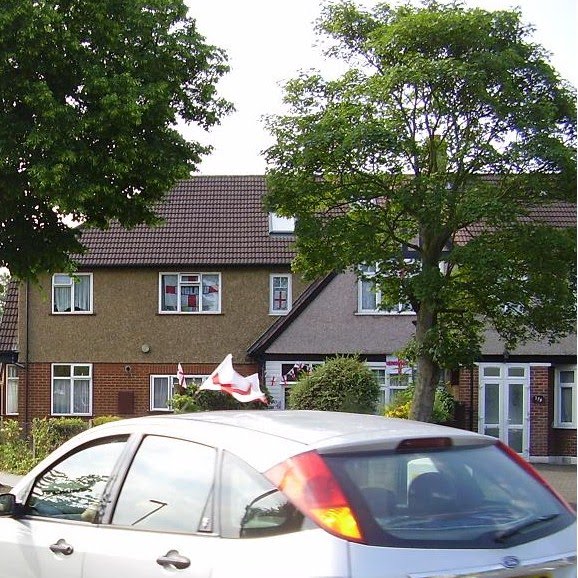
As someone waiting with me pointed out, it wasn’t for a lack of patriotism. The cross of St. George fluttered past us on cars and vans in the hot June sunshine. The World Cup had the lion’s share of the publicity and it was the three lions on football shirts that preoccupied most people rather than the young ones thousands of miles away under a different, hotter sun.


Perhaps things were not so different in 1921 when the memorial was completed, the money for it raised slowly almost reluctantly by a village that had lost nineteen men to the Great War. Perhaps it was too soon, too painful for some to cope with then, and again in 1945. Following both world wars there could have been very few people who did not know someone who had been in uniform, or recognise a name on a local memorial. These days it is uncommon to have a family member or friend in the armed forces so perhaps it is not surprising that there is a lack of awareness of such events. Most of us are left out of the loop.

Waiting for the parade I wondered how much the area had changed since veterans had first stood there one Sunday in June, 1921, before the plane trees had grown to such a height that they shaded us as we waited. They would have been a small group of local men, perhaps wearing suits made by the local tailor. A generation later that suit would have come from Burton’s, across the road, and after that it may have been a demob effort. The butcher, the baker and, in our case, the farm labourer took off aprons, put down tools and, during that two minutes of silence, became once more the young men that they had been, bound by shared experience, surrounded by the friends who hadn‘t come back. Then back to the Legion for a pint, memories carefully recalled and stored away again between Novembers.

“Ye who live on mid English pastures green,
Remember us, and think what might have been.”
War memorial inscription

Maybe it is because of them that we are so complacent and detached from current events. A lack of desire to brag, a need to return to “normality” as soon as possible in spite of the nightmares, a decision to take advantage of the prosperity that was coming their way and forget what had gone before. The Second World War largely disappeared with the tape that had been on the windows, but lingered on in army surplus and Utility goods which would do until you could afford something better. Perhaps it was both their gift and their fault that in the sixty-five years since the end of World War Two we have lost that everyday connection with the military.

Because when it did arrive that parade was such a grand and alien thing, pounding past the supermarket, the take away, the estate agents. We heard it before we saw it, loud and martial, and by the time it reached us, the glitter and snap of banners dismissing the mediocrity of everything about it, our hearts were probably beating in time with those drums. What a contrast with the slouchers in their football shirts, the girls in their summer clothes. It silenced the drivers stopped by the police and the teenagers on their mobile phones. In a world where we rarely stand up straight these people might have come from another age.


Yet however separate and different they may seem from the rest of us they still attract our support when we are afforded the opportunity to give it. The turnout for the main Armed Forces Day event in Cardiff was impressive and the words “Help for Heroes” are now seen and heard everywhere. A recent link up between a national radio station and the British Forces Broadcasting Service led to the posting of thousands of goodwill messages on their website, more than they could cope with. It isn’t the average person’s fault that this year Armed Forces Day had to compete with the National Squad for the average person’s attention.


Since then En-ger-land have lost a match and are out of the World Cup. Most of the flags will come down, although some will be left to the mercy of the elements. The team will fly back to a less than joyous welcome and scrutiny that will last considerably longer than two minutes. In the meantime, far away and out of sight their less well paid contemporaries will continue to watch dusty children score goals with bundles of carrier bags or plastic containers, as they have on many other postings, and dream of coming home.


http://www.armedforcesday.org.uk/
http://www.warmemorials.org/

Wednesday, 4 November 2009

Red for a reason


We are a few days away from Remembrance Sunday and Armistice Day. On Saturday we got our poppies from a Royal British Legion collector in Ealing and slotted them in where we could. I have seen them on people I would not have expected to have been wearing them. I have worn one every year since childhood, my mother expected it of me and as I grew older if I hadn’t already bought one myself she would provide it. When the words “Haig Fund” disappeared from the centre I noticed it. If I ended up with one that had a leaf as well as a flower I felt a little smug. For years I’ve wondered why they didn’t make ones with pins.

Papaver rhoeas, the cornfield poppy, grows easily in the disturbed ground of battlefields and it was a common sight to those who took part in the First World War. A Canadian surgeon called John McRae immortalised the image of silky blood red flowers amongst the crosses that, in 1915, were already marking the first of millions of graves in his poem “In Flanders Fields“. Many still lie where they fell, waiting to be discovered by the turn of the plough.

Red poppies were eventually sold as fundraisers by the British Legion which was founded within three years of the end of the Great War to act as a voice for ex-servicemen (it became the Royal British Legion in 1971 following the granting of a Royal Charter). White poppies were first sold in 1933 by the Co-operative Women’s Guild who wanted to support the many disabled veterans and prevent further wars. They are now provided by the Peace Pledge Union.

Over the years I have seen a few white poppies worn by old soldiers in the parade past the Cenotaph in Whitehall but the vast majority wear red ones. I haven’t taken much notice of white poppies or those who wear them until now but they were brought to my attention by someone on Facebook who was encouraging members to join the White Poppy group that has been set up on the site. I followed the link to the official website and ended up feeling quite angry as a consequence. It wasn’t just that they had used the image and story of Harry Patch, the last remaining WW1 veteran, to promote their cause.

I object to the assumption that seems to have been made by some white poppy wearers that those who wear a red one are absolutely in favour of war. If a similar, negative generalisation was made about those who promote the white one there would be an outcry from the media savvy anti-war movement. Old soldiers are usually the first to tell you that war is a terrible thing. They don’t need lessons from a generation saved from conscription by a standing army made up of volunteers.

These volunteers sometimes do what they are ordered to even though they do not have much faith in the politicians who send them to war. They go back into the theatre of operations in spite of a lack of adequate equipment and their own fears. It is the efforts of people like this that has made it possible for others to talk about and live in peace. They don’t just go to kill - they build essential bridges, repair schools and hospitals, train police forces and armies. Sometimes they do it in their free time because they want to help, encouraging their friends and families back home to fundraise for that cause. The five British soldiers whose deaths were announced today died alongside two of the Afghan policemen they were mentoring. They were doing something positive.

On its Facebook page the White Poppy group states that “The White Poppy symbolises the belief that there are better ways to resolve conflicts than killing strangers.” The Peace Pledge Union believes that the solution to situations such as Afghanistan is a UN force. Try telling that to the British soldiers who, under the auspices of the UN, tried and failed to protect people on all sides of the conflict in the former Yugoslavia. Hamstrung by their mandate, they and forces from other countries were obliged to stand back and watch while men, women and children were herded away to their deaths in places whose names have become as familiar to us as the battlefields of the Somme and Ypres were to those fighting in World War One. I’d love to see how those who regard the UN as the cure for all ills would cope with the nightmares that these people still get because they were not allowed to use force.

To make those blue helmets as effective as they should be you first have to sort out the lumbering apparatus that is the UN and that will take some doing. In the meantime are we expected to stand back and watch as another Rwanda, another Bosnia, another Somalia starts up because conflict is a terrible thing? It makes me wonder if those who are against war at any cost have a genuine understanding of the sort of people our forces are up against. How do you reason with those prepared to cut off the purple stained fingers of voters in Afghanistan? How do you talk to men who behead foreign workers because they wanted to feed their families?

Apart from that, I don’t think the efforts of “peacemakers” are always welcomed by those they are trying to help. Live rolling news allowed millions of viewers to see a crude banner made from a painted sheet held up by Iraqis following the fall of Baghdad to US forces. The hotel they were standing in had been a temporary home to foreign peace activists who were hoping to put off air raids. Judging by what it said on the banner the Iraqis they were standing shoulder to shoulder with were pleased to see them go and the cavalry arrive. One of the words rhymed with “bankers”. In 2005 four men, including Norman Kember were kidnapped in Iraq. One of them was shot dead but the rest were eventually rescued by British special forces who had spent weeks looking for them. All those resources used up on peacemakers who should not have put themselves in danger.

I accept that in a democracy we have the right to express an opinion as long as it does not deliberately inspire hate and violence. If a veteran chooses to wear a white poppy I have even more respect for him because he has made his choice based on genuine experience. However those who wear red ones have the right to take pride in their achievements and if that means parading with brass bands then so be it. The guns carried in these parades are for the defence of our country as much as they are for war abroad and I take pride in the men and women who carry them. If it ever became necessary for me to pick up one of those guns myself I hope that I would be able acquit myself as well as they do.

What many of my contemporaries forget or have never learned, cushioned as they are from reality by the freedom made for them from war, is that the true soldier loves peace but it isn’t always an option.

http://www.poppy.org.uk
http://www.poppyscotland.org.uk/
http://www.whitepoppy.org.uk/
http://www.greatwar.co.uk/poems/john-mccrae-in-flanders-fields.htm/
http://blogs.telegraph.co.uk/news/ceriradford/3641401/Stop_the_crusades/
http://news.bbc.co.uk/1/hi/uk/4844800.stm


Saturday, 6 June 2009

Remembering


There has been a fuss over the failure of the French administration to invite a member of the British Royal Family to the commemoration of the 65th anniversary of the D Day landings. If French commentators are to be believed Mr Sarkozy was so keen on a love-in with his new best friend, US President Oabama, that he forgot about asking along the only head of state who took a part in WW2. Mr Obabama’s intervention has meant that Prince Charles will now be attending the event. We will at least be spared the prospect of the Queen’s outfits being compared with those of the elegant clothes horse that is Madame Sarkozy. The true stars of the show are, as ever, being overlooked.

I’m not sure why the memory of a particular D Day veteran makes me well up. We were in the art gallery of the Imperial War Museum in 2004, standing in front of a painting of Arromanches, liberated on the 6th June 1944. A pensioner was standing next to us wearing his beret and medals. He had a huge smile on his face. “I was there,” he said, “Arrowmancheese!” He couldn’t pronounce the name of the place where he might have been killed but in the tradition of Tommies from Wipers to The Sandpit he had made it sound more interesting. He didn’t tell us anything else about himself and we have no idea what he did there but the thought of that encounter still moves me to tears.

I wonder whether most people understand the hurt felt over that delayed invitation by many of those marking the 65th anniversary today. The 60th anniversary of the D Day landings in Normandy was a big occasion. Everyone from the BBC to the Royal Family turned out for events in the UK and France. There seemed to be a sense that this was the last time that so many survivors of the Allied landings would be able to gather at one time, as age and ill health would now begin to take their toll. There were special events, exhibitions, television programmes, in particular there was an attempt to explain to a much younger generation the significance of the event and the role played by their grandfathers and great-grandfathers.

There must have been a time when the Second World War was something that most wanted to forget, especially those on the home front. Victory in Europe meant the removal of tape from windows because there were no more air raids, no more blackouts and nights spent in shelters. Today we make do and mend because we choose to recycle. It is hard to imagine what it was like to long for new clothes. Goodbye Utility, hello Dior. For those who had been away for years, so long in fact that their children did not recognise them, there were different things to forget. The sight of good friends blown to pieces. The fear and hunger of those who were prisoners of war. The terrible recurring memories to be endured in silence. All that misery, anger and pain buried in the work and play of “normal” life.

My great uncle, whose part in “The Great War” ended in a shell hole where he was found with a broken leg by the opposition, rarely talked about what had happened to him. He became a clergyman in the years between the wars and returned to France In 1944 as a chaplain in the Territorial Army. My limited understanding of what he went through comes from Sunday afternoons watching “The World At War” as a child. I remember craning my neck to look at the memorial to the Royal Artillery at Hyde Park Corner when we passed it on the bus because there was something sad and beautiful about those caped figures. I got to know the mock up of a WWI trench at the Imperial War Museum quite well although I have to be honest - this little girl didn’t really get it. Someone I knew loved black and white war films because they reminded her of the exciting and liberated days when she drove an ambulance during air raids. Looking back I realise that references were made constantly to those wars because they had such a profound effect on those who had lived through them but I had no real understanding of that at the time.


Living with someone who spends quite a lot of his time making models of planes, tanks and ships has left me a little more informed about WW2 but it was Northern Ireland and the Falklands that had the most impact on me. I grew up in a city that was under threat from IRA bombs so I couldn’t help but understand some of the fear. I watched the news reports from the Falklands but it took years for me to develop a real understanding of what war can do to those who engage in it. The odd thing is that it was my encounter with someone who didn’t go to the Falklands that stays in my mind.

In 1990 I got talking to an exceptionally tall man who used to hang out in the subway at South Kensington Underground Station. He clearly wasn’t a rough sleeper but he usually had a can in his hand. Eventually he told me that he had been persuaded to join the Welsh Guards by his father, which he could deal with until the Falklands came along. He had not been on the boat when it left and in the course of avoiding the MPs who had come to find him he had jumped from a window causing irreparable damage to his back. The irony was that he had to live with the guilt of avoiding the tragedy of the Sir Galahad and the Sir Tristram because he deserted whilst being on a pension for his disability. In a home of his own but marginalised by society, he felt that he had more in common with homeless alcoholics than the men he had trained with.

He isn’t the only one I have come across who had been talked into a career in the armed forces (usually by a civilian parent) at a time when becoming involved in an something other than a tour of Northern Ireland was unlikely. It was a bit of shock suddenly to find yourself being sent to war. I don’t judge them as I do not know whether I would have the courage to fight if I was told to. It means that I am all the more impressed by those who are joining up now, with a clearer knowledge of the risks they face. They can hardly have escaped the news reports and videos posted on the internet make it difficult to hide the truth. They have something that isn’t often mentioned these days, a sense of duty. I heard that word, duty, used by a member of the Royal British Legion when I stopped by at the local branch to take a photograph. It is that sense of duty that makes someone organise the sale of the poppies that fund the Legion’s work, and keep on doing it for thirty years. I hope that a sense of duty is behind the attendance by Prince Charles at the commemoration in France and any future invitations from Mr. Sarkozy.

“Their lives have ended, but dreams are not yet lost
if you remember in your laugh and song
these boys who do not sing and laughed not long.”

from “The Lost” by Herbert Corby


http://www.britishlegion.org.uk/
http://www.remembering.org.uk/ra_memorial.htm