Showing posts with label work. Show all posts

Saturday, 23 April 2011

Made in China 2: Something to remind you


Just in case you’ve been on Mars, two major events are on the horizon that will be especially significant for Londoners.

The first is a royal wedding, an occasion when at least two of those involved will probably wish they could just get on with it without all the attention. The second is the 2012 Olympics, an occasion where all of those concerned hope for lots of the right kind of attention (a sports festival free of corruption/scandal/performance enhancing drugs - don‘t hold your breath).

What they have in common is that they will provide opportunities for a great many people to make an awful lot of money, in some cases by selling something truly awful.

Having perused gift stalls in the stifling heat myself, I can understand why someone saw a certain item and thought of me. They were thirsty, their feet hurt and they felt they had to get me something. Besides, everything looks terrific in strong sunlight. Bad taste isn‘t really why I‘m raising this issue, if someone cares enough to buy me a gift on their holiday I should be grateful for it. What winds me up is how often I turn these things over and see the words “Made in China” on the back.

One of the ugliest gifts to grace our home was a nightlight holder from Lanzarote, nasty to handle and impossible to clean because it was so rough, a humorous reminder of the black volcanic landscape of the island. It was horrible but at least it had the virtue of being made in the place that it represented! Its maker is holding their own against an onslaught of foreign made souvenirs.

If, as I do, you live near a big city that attracts tourists, take a look at what’s on sale to those who spend their hard earned money in your country. Take a long hard look at the things that some retailers have chosen to represent you, your culture, your home. Remember, they’ll see them and they’ll think of you.

Walking past a shop in a local station overflowing with items aimed at visitors, I’ve always wondered where the small plastic Union flag purses were made. So in the interests of research I bought one and found that it was, of course, made in China.

I doubt if those buying these purses really give a damn where they were made, they probably just want something cheap, but I’m beginning to wish that they did. “Souvenir” is a French word meaning “to remember”. If the people who buy these things want something to remind them of the time they spent in the UK I would rather it was actually made here and reflected the good design we are capable of, however cheap the item.

Those plastic purses are made by a British company and according to their website they design what they sell. At one time they also made their products in the UK. All sorts of reasons get cited for the transfer of production abroad by companies like this. Top of the list is that it is often cheaper to manufacture goods outside the UK. Lower costs, fewer regulations, quicker production and supply of short runs all figure in the reasoning behind a move abroad. It makes for a wider profit margin and you could argue that, as the company is based in the UK, it’s a good thing because the profits stay here. However, lower costs means lower wages. Fewer regulations can mean poor working conditions and little or no trade union representation. Speedy supply and short runs? Pressure to work long hours in a job with little security. It also means jobs lost or never even created in the country that these souvenirs are supposed to be a reminder of.


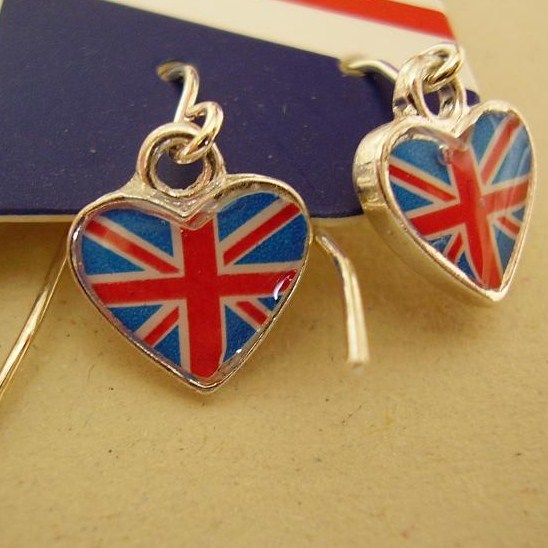
The company responsible for the purse has also created a royal wedding range and I would be surprised if any of it has been made in the UK. They’ve used licensed photographs of the couple on their plates, mugs and magnets which means they’ve had to pay to do so. Another company has avoided this by producing a range called “Royal Wedding” which makes no specific reference to them. You’ll find it in branches of a large supermarket chain, everything from paper napkins to a replica of that sapphire engagement ring. It appears again, in miniature, as a pair of earrings, made in China. The official royal wedding range sold through the Buckingham Palace shop, is made in Stoke-on-Trent, where ceramic goods have been produced for centuries and the profits will go towards preserving the extensive Royal Collection.

I find the failure to provide British made souvenirs for a truly British event like the marriage of Prince William and Kate Middleton particularly frustrating because I keep being told that the UK will benefit from both it and the Olympics. It’s hard to see how we can if there are factories in China just waiting for the news of a royal engagement and capable of turning out thousands of items within days.

The Olympics should be an opportunity for the creative as well as the sporting community of a host country to profit but it seems to me that the benefits and rights of the occasion are shared out amongst corporations long before the circus hits town. The contract to supply enamel pin badges, one of the most lucrative elements of the souvenir industry for the London 2012 Olympics, was awarded to a Chinese company. Many of the twenty-six companies it beat off to win the contract were British - where did they go wrong? I contacted one company that sells enamel badges and according to the person I spoke to there is only one small business still making them in this country. The reasons they aren’t using that manufacturer? Cost and lead time. The profit made on these things is so big that even notching up thousands of air miles by flying them to the UK is no big deal.


It is the small, almost disposable items like badges that bring in the cash, the things that almost everyone can afford. Ask the person managing the shop at any stately home in the UK what the best sellers are and I guarantee that the answer will be erasers, pencils and postcards, because they regularly welcome parties of school children with pocket money budgets. It would be fantastic if all those small basic souvenirs could be made in the UK. A company called Pageantry Postcards is making the effort to produce its goods here and they are typical of the sort of company we should all be supporting. Another, at the more expensive end of the scale, is Colonial Soldier which sells hand carved figures of British soldiers alongside antiques.

I find it extraordinary that a country with such a great reputation for studio pottery does little to promote it to tourists visiting the UK and to organisations such as the London Olympics Organising Committee. Use of the Olympic brand is so tightly regulated that it is unlikely that a local potter could get away with knocking out a few mugs with “Olympics 2012” painted on them. In fact he or she wouldn’t even be allowed to paint on the words “London 2012” without the written consent of LOCOG.

In my opinion it is only legislation and official promotion which will help local artists to genuinely benefit from big events. Discussion and awareness of the issue by local legislators is long overdue. In some cases it is takes simple embarrassment to effect a change but what will it take to embarrass our politicians into changing this?

Think about what you spend your money on when you next take a holiday or mark an occasion. It isn’t just about job creation and national pride. Concerns about human and animal rights should make everyone think twice about what they take home with them. Personally I don’t want to look at something in my home and know that the person who made it is denied rights that I take for granted, nor do I want visitors to my country to believe that I’m happy that British souvenirs are made somewhere like that. It’s nothing to be proud of. There are so many gifted craftspeople and artists out there - make the effort to look for them. They might not be plastering what they make with the local flag but what they create can be just as effective a reminder of a good time.

Guggenheim Museum petition for Ai Weiwei, collaborative artist, Bird’s Nest stadium, Beijing
Olympics 2008

Make a donation to Kate and William’s favoured charities

Monday, 20 December 2010

A fresh steed for Sir Galahad


There have been times when, as the passenger in a car, I have seen some other traveller lurking miserably on the hard shoulder, waiting to be rescued. And I’ve usually said out loud “Poor thing. I’m glad that isn’t me.”

If you travel by car there is always a chance that something will go wrong, in fact your car may still be parked in front of your home when a problem becomes apparent. If you are really unlucky it will happen on a bank holiday, miles from home and in the worst weather.

It happened to us at this time of year, Boxing Day to be precise, crammed into the car with two other people on a visit to relatives. It was maddening, we were almost there when it became clear that something was wrong and my partner pulled over as soon as he could just as the engine gave out. The rest of us sat there while he disappeared into the pouring rain to call for help (this was before mobile phones became widely available), gritting our teeth as every passing car left our own rocking in their wake. Woomph. Woomph woomph. It was more than a little frightening.

After what seemed like an age he squelched back, chilled to the bone and not particularly happy. We had a long wait ahead of us. Along with thousands of other people we had chosen to visit someone else by car and a sizeable proportion of us were in the same situation, waiting to be rescued. All the breakdown services were stretched. It became noticeable that some drivers weren’t put off speeding by the atrocious weather .We felt very vulnerable but there was nowhere else to wait. We were extremely lucky that one mechanic broke off from the job he was tasked with to tow us to a nearby petrol station which was of course closed. There was a pub nearby otherwise things could have become even more unpleasant. The edible goodies that were intended as gifts were consumed and we ran out of things to talk about.

By the time another mechanic arrived to tow us back home we were feeling really desperate. Decorum prevented us from planting big wet kisses on his face and hugging his knees but he could probably tell we were pleased to see him. That tired man had become a knight in shining armour and his truck a white horse.

Since that experience I have become aware of just how big a risk those who repair vehicles at the side of the road really take. That vulnerability applies to anyone who has to rely on one of those glowing jackets and the common sense of passing drivers for their safety - the jackets are usually more apparent than the common sense. A moment’s inattention by a passing motorist or poor travel conditions can leave them injured and fighting for life.

This is what happened to Tyrone Williams in 2000 as he worked on a car parked on the hard shoulder, only it was a lorry that hit the car he was working on. The accident left him with multiple fractures and a number of injuries that were not identified at the time. He is unable to work. Today Ty is trapped at home, missing out on the normal everyday activities that we take for granted.

I have some idea of what that is like as illness has left me stranded indoors and reliant on other people for long periods of time. The chores that others find tedious become the sort of thing you long to do. The weekly shop, the trip to the post office, collecting your kids from school. Miss out on these and you are missing out on life and community. The isolation begins to have a debilitating effect that is a powerful as the physical one of the original injuries.

Ty has used mobility scooters but the severity of his injuries have left his spine in such a delicate state that he is left in agony in spite of pain relief medication. What he really needs is a wheelchair with the degree of suspension that will protect his spine but allow him access to daily life. You won’t be surprised to hear that this is going to be expensive - £3,395 expensive to be precise. Fortunately Ty has an old friend and fellow mechanic to help him out. Corporal Randall-Eyre, known as Bear, has set up a fund in the hope that anyone who has ever been rescued by someone like Ty will remember it and make a donation.
UPDATE: PLEASE NOTE THAT THE MONEY HAS NOW BEEN RAISED AND TY HAS HIS SCOOTER - WELL DONE TO BEAR FOR HIS EFFORTS.

As I write this there are a great many people stranded in cars waiting to be rescued. It may be for mechanical reasons or because of the heavy snow. The person who reaches them will do it on spite of feeling tired and hungry because he is prepared, quite literally, to go the extra mile to keep someone safe. It isn’t just about fixing an engine and getting paid for it. The man who towed us to the petrol station years ago didn’t have to do it but he could see that we were in a precarious situation and he dealt with it. When you curl up under the duvet tonight spare a thought for all those who are just about to go to work in the cold and dark, to get you home for Christmas.

Thursday, 11 November 2010

Slobs, snobs and hypocrites


“The feckless unemployed will be forced to take part in a punishing U.S.-style ‘workfare’ scheme involving gardening, clearing litter and other menial tasks for just £1 an hour in a new crackdown on scroungers."
"£1 an hour to clear rubbish…new IDS blitz on the workshy” Simon Walters, Mail on Sunday, 7/11/2010

I make a point of checking for little grey yellow blobs and smears in a particular men’s toilet that I have cleaned for the last three years.

Some will know what I’m talking about. For the less switched, on, I am referring to phlegm. The sort you find up your nose. Cleaning the urinals, I can imagine the snot artist digging away at the contents of his nostrils as he empties his bladder, flicking his finds at the porcelain where they cling and harden until I turn up to clean it off. It is unlikely that, having parked his best friend, he washes his hands. So the same finger that has been busy up his nose travels back to the office with its nasty little payload of germs, onto the door handle, the light switch (which he has sometimes embellished with his trophies), the office fruit bowl, that open bag of crisps left unguarded on a desk and eventually to a keyboard shared by any number of his colleagues. All unaware of what they are being exposed to.

This may be the same person who complained because he found some leaves under his car. Obliged to pay the maintenance company even more that year he was really annoyed to see any litter there at all. He called the company and the company called me - it is usually me - to find out what had gone wrong. Nothing, it turned out. Fallen leaves in an outdoor car park are a consequence of having trees around you in autumn. But because this man is hard to please and contracts are hard to come by I was asked politely but firmly to get to work half an hour earlier than usual to sweep away the leaves. I left our dying cat on his own for the twenty minutes until my partner got home from work, and spent money on a fare that I had been saving by walking the three miles to work. And thought about what I would do to the person in question if our beloved moggy died on his own in the meantime.

Personally I don’t have a problem being seen sweeping up litter outside a building but I have found that it has a “Princess and the Pea” effect on colleagues. You’d be surprised at the number of royalty employed in the cleaning industry. I can always tell because when it dawns on them that I wasn’t kidding about clearing litter from the entrance they start to make excuses or just don’t do it. I am now sharing the job with the fifth person in three years. I thought things were going to be better this time until I realised that my new colleague did not want to be seen wearing an overall unless she is cleaning the toilets. Someone might mistake her for a cleaner.

Every time this happens I find myself planning unspeakable fates for the magistrates and judges who use work like this to punish celebrities. There have been a number of Naomi Campbell moments over the last three years as adult women morphed into sulky teenagers for the time it took them to push a brush around a five metre wide space. It doesn’t help that the smokers in the building ignore the “No Smoking” sign at the entrance and drop their cigarette ends there. At least we no longer have to empty out the wall mounted ashtray. I could never hold my breath for long enough to avoid a lungful of the ash that it held and I would stink of it afterwards.

The horrors of the job now lurk indoors, in the toilets. Torn between working quickly to get out of there as soon as possible and trying not to cause splashes, I can’t always avoid being hit on the face by the contents of the bowl. It isn’t the excrement, blood, urine, vomit or mucus that worry me. The boss refers to toilet cleaner as “toilet acid” for a reason.

I sometimes wonder if the people who work in that building realise just how much I know about their guts. The day will come when, having been told yet again that the toilets are not flushing properly, I will stand in the doorway of an office and explain to the occupants that the consumption of junk food/fizzy drinks/eating too quickly/failing to chew results in floaters. I may throw in the fact that by failing to wash their hands after using the toilet they could be treating their colleagues to diarrhoea or flu, that an outbreak of E. coli could, at best, close down their business for weeks. At worst it could kill them. It amazes me that, on a planet where so many people die for the lack of clean drinking water, well educated people fail to use what is freely available to them to wash their hands.

However when I recall the gifts they have left for me in those cubicles I suspect that some of them were raised in a barn before they hit university. Special mention goes to the woman who must have leaned forward during a bowel movement, depositing a broad pile of excrement on the ledge of the toilet bowl, under the seat. By the time I arrived this had hardened and it took me over half an hour to soak it off. Thanks for that, princess. People are particularly thoughtless when it comes to rubbish. A dagger-like piece of broken glass, coated in who knows what, pierced a bag and scored a deep scratch through denim and into my calf when I worked as a caretaker.


You won’t be surprised to learn that I don’t wear couture for the job in fact, even when they have been washed, the worn jeans, tops and fleeces are stored away from the smarter clothes. Count yourself lucky if you wear nice clothes to work. I look like a rough sleeper which may be why I am sometimes spoken to as though I have serious learning difficulties. The worst snobs are not the bosses. It tends to be the underlings who’ve had a hard day that pass on the misery. They look up to their boss because he/she pays them. They look down on me because I clean the office. I know my place.

It’s almost funny that those who have been on benefit for a long time are being threatened with a similar experience at £1 an hour. At £6 an hour (the Mayor of London regards £7.85 per hour as the living wage for my area) it is already a punishment. I don’t know if the proprietors of cleaning companies are rubbing their hands at the prospect of having so many contracts and employees available to them at a discount but I do know that the value of my work has risen over the last three years, even if my pay has not. They are charging even more for the same services and it shows in the way that every failing is now noted and reported. I don’t blame them for asking that they get what they pay for. I just wish they’d realise that I haven’t gained from the increase.

Few seem to understand what life would be like if there was no one to sweep and clean. The kinder ones say things like “I don’t know how you stand it. I couldn’t do it.” But they don’t seem inclined to pay me more for doing it. On the occasions when a colleague failed to turn up for work in an office that my company dealt with there was a degree of panic as they tried to replace a rubbish bag without breaking a fingernail. The sort of fingernail that would pierce the latex gloves I use when fishing out a floater that refuses to be flushed away. Some of them treat you as if you aren’t there which usually brings out the worst in me. Doing my own work as well as that of an unreliable colleague one evening I heard one executive ask another if “they” had shown up yet. “They will get there when they are ready because they only have one pair of hands!” I snapped. I think his mother must have been the last person to have spoken to him in that way because a) I got away with it and b) he left looking rather sheepish. “They” is actually an improvement on “the girl”. Especially as “the girl” is forty-five years old.

The problem I’ve got is that I am lucky to have this part-time work. I need the sort of job where I am left largely to my own devices, away from crowds, because I have panic attacks and suffer from agoraphobia. That makes it hard to find anything better paid that makes use of my skills. I find it irritating that some people think I’ve ended up as a cleaner because I spent my time at school looking out of the window. For this I wrote essays.

I am concerned that those obliged to take part in a “workfare” scheme may find that once involved in unskilled work it is hard to get clear of it. Cleaners in particular find it difficult to find anything other than part-time work, which means they probably won’t notch up National Insurance payments or get sick pay. To make any significant money they have to get several jobs which means spending money on fares and working unsociable hours. There are few opportunities for promotion. Some employers are very cynical about the standard of work and I get angry about the poor reputation that goes ahead of me because some cleaners are so lazy and unreliable. But when you think about how little we are paid for what we are expected to do it isn’t surprising.

The consequence of the low pay and stigma associated with menial work is that it will nearly always be done by the desperate, usually immigrants. Virtually everyone I have come across lately sweeping up litter has belonged in this category. They have travelled halfway around the world only to have others look down on them yet they are grateful for the money. I grew up in tied accommodation in a very affluent part of London, a few doors from a Middle Eastern family who did not let the fact that they lived in a small mews house stop them from having a live-in maid. This qualified teacher had left her child in the Philippines to sleep on a kitchen floor in Knightsbridge and sent all her earnings home. At the time her government took a cut of the money earned by its émigrés.

For a while I cleaned a flat for a Sudanese family whose relative brought her maid with her when she visited. This woman, who was of African rather than Arab descent, never spoke, raised her eyes or looked at anyone directly. Both her employer and mine reminded me of spoilt cats. I once pushed the beds apart in the children’s bedroom and found an upturned plate of food on the floor. She couldn’t be bothered to check if her sons had eaten or to clean up after them, leaving them in front of the television with their meal.

I had hoped to find something better within months of getting my present job but I’m still there. At the moment it is just about worth it but the proposed increase in fares will mean that I am earning money simply to pay the fares. As it is I only use public transport to travel to work and walk for an hour to get home. This costs me a round a tenth of what I earn. I did walk both ways for a while but it almost finished me off. A six mile round trip with a stop to clean fourteen sinks, eleven toilets, six urinals, wash eight floors and/or vacuum and dust a six storey building. I‘m not that good. The really desperate may have to be.

“Our changes will make work pay and create the biggest package of back-to-work support ever seen. Asking someone who has been out of work for a long time to get involved in a programme of work to boost their self esteem is not a recipe for despair, but a way to repair their shattered lives.”
Iain Duncan Smith


Friday, 25 December 2009

Be nice to your fireman this Christmas

For the last two years I’ve worked in the evening on Christmas Eve or New Year’s Eve and as a gesture of solidarity I’ve dropped off a bag of goodies at the fire station opposite.

The first time I did it I wasn’t prepared for the reaction I got. The man who answered my tap on the door seemed absolutely stunned that I had done this. He said “thank you” so often I started to get embarrassed and walked away feeling a bit tearful. The same thing happened the following year.

What amazes and saddens me about this is that the fire station in question is not stranded on a suburban roundabout. It is right next to homes and offices on a busy street. I can understand that those working in the office buildings aren’t around during the evenings and weekends but they must, as I do, see the engines rush off to a call. The flashing lights, sirens and bells are hard to miss. As for those who live right on the doorstep - if you’re reading this, I hope you’re ashamed of yourselves.

I know that when I spend an evening at work the worst thing that could probably happen to me is that I might trip over the vacuum cleaner cable or get splashed by something unspeakable. The chances of my dying from smoke inhalation are pretty slim (as long as certain people avoid using fire extinguishers as doorstops), as is that of being maimed for life in the course of my shift. However that could happen if it wasn’t for the speedy response of the folks across the road. They take that risk to stop it from happening to me.

Over recent years the emergency services have become the targets of, well, what do I call them? Thugs? Yobs? Uncontrolled, uncontrollable children and teenagers who take pleasure in assaulting the people who go the extra mile to keep us safe. There are places in the UK where starting a fire and calling the fire brigade so that they can lob things at them is entertainment. The same risks are faced by ambulance crews. While the police might to some extent regard this kind of behaviour as going with the territory it is almost beyond belief that anyone should want to target a fireman or a paramedic in this way.

That aside, I think the fact that we do not value those working for the emergency services speaks volumes about the sense of entitlement that has developed in our society. It has taken campaigns and images of amputees and coffins to awaken our respect for the armed services. Perhaps that’s the problem. If firemen, nurses and policemen were dropping like flies on a daily basis the majority might begin to notice their contribution.

Another obstacle to their being looked up to by the community that they serve is that, unless it is a very small one, they do not usually live where they work. In the case of the one that I am familiar with they probably can’t afford to live there. There is a sense of separation and the living breathing humans who do this work are just uniforms rather than recognisable members of the community. I don’t know that we can change that. The development of Safer Communities Teams have certainly helped to give our local police recognisable faces. This Christmas it even meant a home baked cake from me. When I was a child we knew our beat officer so well that when he retired he gave me the metal flower from the top of his helmet as a souvenir. I still have it somewhere. It’s interesting that in the idealised realms of childhood, for example Trumpton, it is taken for granted that there is a local fire brigade and we all know their names.

It isn’t about the food because, let’s be honest, many of us are already sick of mince pies by Christmas Day. It is the gesture that counts and the thought that someone, even if it’s just the eccentric cleaner from the building opposite, has noticed the effort you make when the rest of the world is tucked up safe in bed.

Tuesday, 25 August 2009

It's not the job, it's the people...

I’ve had a part-time cleaning job for two years and can still remember the sense of disbelief that it was in the bag. I thought it would be more difficult. Two and a half years later I have to stop myself snarling “I resign!” down the line to my boss. It isn’t her fault. The problem is the series of lazy idiots that I have been obliged to work with. Or rather, whose work I have had to do. We are told that any job like mine is being chased because the credit crunch has meant that we are all looking for extra income. That should mean that the people doing them are worried about keeping them and work twice as hard. Don‘t you believe it.

My colleague was employed by the company I work for to clean an office in the building where I deal with the communal areas. As soon as she arrived she informed me that she had booked a holiday and would therefore be unavailable for over a week. Fair enough, the holiday was booked before the job turned up. Following this holiday, her absences (often unannounced) became frequent and a nuisance. She finally told me what the problem was and it did seem that a close family member was in a very fragile physical condition. What I couldn’t understand was why she couldn’t explain the problem to our boss who is very understanding and quite capable of seeing things from her perspective. It was as if she was setting herself up to be fired.

When she did let us know that she wouldn’t be there it was at really short notice. I kept getting phone calls five minutes before leaving for work telling me that I would have to provide cover. This was a complete pain because, at the time, I was sharing my job with a person who was also in the habit of taking days off without notice. Apart from that she was absolutely unwilling to work on the premises the other person was responsible for as it meant that the people who worked there could tell if she was cutting corners. So I always had to do it.

This meant that my other colleague was earning twice the pay for providing cover when somehow she managed to finish both her work and mine within the same amount of time it would normally have taken her just to do her own work. In fact she got quicker and quicker at it. Cleaning work like this is usually unsupervised, you have to rely on the honesty of the cleaner and the astuteness of the people using the facilities being cleaned. In the past things had to get really bad before a complaint was made. The rising cost of cleaning and maintenance means that people now expect to get what they pay for. These days if the toilets haven’t been cleaned they say so. And frankly, why shouldn’t they?

The skiver was finally sent on her way after Christmas and I was under the impression that the drama queen who occasionally turned up to clean the office would soon be sent the same way. I was a little surprised to find that, following the termination of her office cleaning contract, she was now to be cleaning the communal areas with me. Especially since the words “I don’t think much of her - I’m going to fire her” had crossed my employer’s lips. A year after the day she first began turning up when she felt like it she is still phoning the office at the last possible moment to say that she won’t be in. At the last minute I am expected to keep things going.

She is the third person to have shared the job with me who has behaved in this way. They have in common the fact that they have been dependent on state benefits for years, in fact the latest one was receiving benefit but neglected to tell our company that or the benefits agency that she had a part-time job. She was good enough to explain to me that I might be getting a visit from the said agency as she had been able to read my name on the paperwork that was on the desk of the person investigating her. It seems that my boss had been asked to provide details of someone who could identify my colleague.

Two of the people I have worked with have raised their children on benefit and have only taken jobs because they were forced to. The third came to the UK as a child refugee in need of medical attention and was brought up by a family member who was already living here. She might as well have been brought up in care as she still speaks broken English in spite of living here for more than a decade and while working with me was only interested in finding out what benefits she could claim now that she was over 18. She was under pressure from a family she barely remembered to get them entry to the UK and a place to live. They seemed to be under the impression that, in a country as wealthy as ours, all it takes is a phone call.

I am left wondering if we have denied a considerable proportion of our population the capacity to think for themselves by making sure they didn’t starve. There was a time when people were embarrassed to claim benefit, it was for emergencies only and not a long term situation. I realise that we are now in a situation where many people have absolutely no choice but to claim but my exposure to three people with a strong sense of entitlement to tax payers’ money makes me think that we have screwed up quite badly somewhere. I think it is absolutely right to make sure that children are fed, clothed and educated but I can’t help feeling that there should be more awareness of where the money comes from on the part of those receiving it. I wonder how many in receipt of benefit understand the mechanism that acquires and provides that money. I don’t expect them to grovel in gratitude for it. What I want is that we end up with fewer people who are good at making excuses and milking the system. I would rather that they used that ability to support themselves.

Once people with that attitude are in the workforce they seem to transfer that sense of entitlement to whatever it is they are doing. They’ve been so well looked after that they seem surprised that they are expected to turn up and actually work. And frankly, why should they?