Showing posts with label regeneration. Show all posts

Friday, 12 August 2011

Young blood

One evening in February I was on my way home from work when I saw a group of people heading towards me.

Faced with potential danger I behave as though I am 6' tall rather than the 5'3" I actually reach and my fantasy Dobermans are panting at my side, giving an outward show of respect to those involved unless the mood changes. I do not speed up and sometimes even slow down but without hesitating or giving ground. In this way I moved through a group of young males, ranging in age from late teens to a couple who could not have been older than eight years old. That shocked me and I risked looking at them as I passed. It was cold, dark and past 8pm on a week day. I wondered if their parents knew where they were or even cared. They certainly weren't dressed for the weather.

"Am I goin' to hear a smash, Ash?!" one of them called out, as they swarmed around a bus shelter. But it was left unscathed as they moved up the street like a shoal of fish, suburban piranhas. It occurred to me that, in their own way, the older members of that group were caring for the youngest and however much I disapproved of their method, they were filling the gap left by parents, often mothers, unwilling or unable to handle the children they have bred.

Six months later I can remember the sudden urge I had to take them all home, to scrape enough money together for a pizza - to share if not to nourish - and be mother. That pang was a strange and unfamiliar feeling, I am not the maternal type, but for a few moments I felt their need so deeply that it made a dent in the cynical shell that protects me from daft notions like that. I suspect that I am on my own with this sense of concern, especially after recent events.

The rioting, looting mobs that filled our screens for two days have led to all the usual calls for greater parental discipline, harsher police tactics and support for deprived areas. I find that I am tired of hearing them, probably because I've heard it all before so many times. Perhaps I am old enough now to recognise that there is no single solution, that any effective repair to the confidence of business owners and residents will be haphazard and largely accidental. There seems to be a growing acceptance that it will take a change in mindset rather than funding to fix things and it is tragic that it has taken so long for this to sink in.

Many are shocked, as I was, that children whose ages must be in single figures were not safe in their homes, watching the chaos on television. Instead they were wandering through the debris of ruined shops, following the example of their older friends and taking the leftovers. Some were even treated as porters, their innocent arms filled with loot by adults too stupid to realise that every move was being recorded on CCTV.

Loving parents who hang on each childish word, lavish time on home cooked meals and lose sleep over unsatisfactory school reports might as well be from another planet to those who raised these tiny looters. My lip used to curl at the mere thought of the selfish lazy creatures who have helped shape our future citizens but scorn has been replaced by a sense of fear that there are so many of them.

A former colleague became pregnant at sixteen by a man whose lack of interest in his son was a regular topic of our largely one sided conversations. I became a near expert on her son’s failings, including his own poor record as a father. Having set the example for his spending habits through her own need for instant gratification she spent hours on her phone berating him about it. Last year I was trapped in a waiting room with several others listening to another woman’s very similar, loud conversations, full of "I" and "me", on her mobile as she described at some length the hard time she was having.

The call that left the greatest impression on me was the one she made to her son. She complained that he wasn't with her, that he had spent the weekend "smoking", that he had failed in every way imaginable, yet when she ended the call and looked around at us she smiled, satisfied that she had such an audience for her woes, oblivious to our vinegary contempt. What a martyr. I could imagine the teenager on the other end, for whom humiliation by stranger was probably a common event, switching off for its duration, almost but never quite numb to the sarcasm pouring from her lips.

I was an adult before mobiles became common but my mother bitched about me to other people, in front of me, in the same selfish cathartic way and I admit that a degree of fellow feeling helps me overlook his use of cannabis. My mother's constant sarcasm cut deep and had a long term, negative impact so I wonder how anyone who does not have enough self confidence to know that they are good at some things could cope under such a negative barrage. Teachers report that very young children now begin school unable to recognise and respond to their own names because their carers rarely speak directly to them except to shout, too busy putting the world to rights on their phones.

To me it is no coincidence that terms such as “bruv” and “bro” are used by young men. When the people that society expects us to respect first and most, our parents, do nothing to deserve it, it is hardly surprising that a peer group or gang becomes the most readily available substitute family. If the dominant woman in your life treats you with contempt whilst behaving in a contemptible manner it is unlikely that you will regard others of her gender as people you want to commit to for life. It becomes inevitable that those who these children choose to prove themselves to are friends who really will follow through, with a beating or even a knife, if they fail to deliver, will teach them shame and pride in a way that their parents never could. It is the closest that many will get to the even handed discipline we all have a right to.

Do not mistake my words for a rant about single mothers because parents become “single“ for all sorts of reasons. An elderly neighbour never tired of telling me of the beloved gentle woman, a war widow, who raised her by herself with very little financial assistance from the government in a way that set a positive pattern for three more generations. The women who typify the modern negative stereotype of the "single mother" are now grandmothers to children who may well turn out just like their parents, raised in the 1980's when conspicuous consumption was a near religion, a measure of self worth.

This is not just about the benefits culture. I point a steady and unforgiving finger at parents who were so keen to achieve their career goals that they replaced love, affection and a guiding hand with all the material goods their earnings could buy. Is it any surprise then, that their children fill the gap left by a lack of nurturing with stuff they don't need when they need stuff they don't want, like education and jobs? To them, greed is still good. As their offspring hurt themselves kicking in shop windows, bleeding on pavements across the UK, the cry went up: “Where are their parents?!” They were watching them in HD, on televisions they may have actually paid for.

Am I the only one to see the irony in the appeal made by David Lammy MP to network providers to shut down the SMS system through which many of these riots seem to have been organised? Thefts were being carried out by those who can afford a Blackberry, using communications that earlier this year were seen as essential to the success of the Arab Spring. To some these looters are revolutionary heroes. The rioters have been characterised as disaffected youths from underprivileged backgrounds but it was predictable that those already convicted include a number who do not lack for money. The emotional famine that their entire peer group, rich and poor, has suffered for a generation or more is only now becoming apparent. Unfortunately the remedy for this sickness is something that money can’t buy.


Wednesday, 27 July 2011

Thirty minutes


It is hard to believe that this screen of ubiquitous buddleia, scenting the suburban air, hides a railway line that has triggered intense debate, caused thousands of people to protest, and made a minister of state into a figure of hate. It is often referred to as “the Chiltern Line” and if the government has its way it will be the route for HS2, a high speed rail link connecting London to Birmingham and reducing the time of the present journey by about thirty minutes. What could you do with thirty minutes? Start the clock.


Spend your thirty minutes trying to complete a public consultation document, bearing in mind that it has been drawn up by someone who wants you to fall into a trap, to make you say that you actually do want a train charging past your home at over 200 miles an hour, that you have no objection to years of construction work, that you believe every word they say about noise levels. You left school to get away from this kind of thing and here you are taking an exam to stop your home becoming worthless, to justify the years, decades of work you put into paying a mortgage. You take advice, watch videos, listen to the experts before you answer “no” to everything, in a desperate attempt to save all that effort and sacrifice.


Think of all those minutes and half hours spent in a job you hate, gritting your teeth to get through one more day, hour, minute without flinging your letter of resignation at the boss, all for nothing because you are a nimby, small fry, nothing to a man whose salary you pay but didn’t vote for. Another nameless face in the crowd at a demo, along with all the other unwanted little people who have cluttered up his day, getting in the way of “progress”.

You will never be one of those gaining that extra half hour on a train moving so fast that the rest of mankind becomes a blur. You will never afford those plush seats and wonderful service. You will wait with all the rest on a station platform waiting for a worn out train that has been held up, again. Because there is no money to improve what already exists, what you can afford. You will sit in your car, on a bus, in a jam caused by the years of construction work that you are paying for to build a railway line you don’t want, can’t afford, don’t need. You will grind your teeth and curse those who inflicted this upon you and your lowly kind and know that you are helpless. You don’t count, your kind never have.


Thirty minutes in a bluebell wood, deafened by birdsong yet wishing you could make less noise as you walk amongst trees that were old when you were a child. A thousand cobwebs and caterpillar threads cling to your arms as they must have done to those of your ancestors when places like this were vast and untouched. You are the first to walk here today, in a place that has never changed and you thought never would until the minister expressed his opinion. Knowing that you are barely a heart beat in the time it took to make this place that cannot be replaced, replicated, remade. Thirty minutes, a pin prick in time in this woodland set like sapphires and emeralds amongst the coral of suburban rooftops, one last place to remember what it must have been like in this land before “progress” came and ate away at your soul. Time counts for nothing here.


Half an hour at an estate agent’s office, listening to all the advice he can give you on how to sell a worthless house. Paint the walls a neutral colour, thank God you redecorated some of it last year, it will take less money, less time. You’ll get the downstairs lav done in thirty minutes. Put the “For Sale” sign up and hope to hell that the neighbours don’t put one of those bloody posters in the window, hope that whoever takes the bait doesn’t check up on what that means. Keep your fingers crossed for a lot longer than thirty minutes, through every rare viewing, trying not to wince when “it” gets mentioned until you realise that they were just curious, not serious, bad luck. Wish that the things that once made your home such a bargain (“Five minutes walk from the nearest station!”) weren’t the things that make it so undesirable now.

The worst half hour is the one spent listening to your tearful elderly neighbour, born in her house, the one she hoped to die in. Listening to the despair of a woman who cannot fill in a form at the best of times and is rendered incoherent at the thought that her childhood home might be demolished, just another of the worthless small fry who will be swept away for the greater good. She loves her garden but even that has made her a target for the mockery of businessmen. She doesn’t own a bowler hat and her lawn is tiny, a postage stamp of green, but she knows each lily and rose, remembers the ones her mother planted and loves them still. It has taken many a half hour to make this patch of heaven and it was worth every moment.


Wonder, sometimes, how long it would take, how many pills, how much booze, to take the problem away forever. How many of those affected regularly spend thirty minutes that close to edge, when the worry becomes too much - “Why are you crying Mummy?” - when there is no fight left and despair takes over. When you begin to think that all the effort is pointless, that all those half hours have been wasted and you are worn away to nothing, for nothing. Knowing that, when the dust that can never settle makes its way, every day, into your home, your precious half hour will be frittered away by a business man, distracted by the many pleasures in that brand new temple to retail - the station - rushing off half an hour late in a wasteful carbon heavy cab to the appointment he might have made, had he been more mindful of those thirty minutes.

Stop HS2 - advice on completing the consultation document
Stop HS2 natonal petition

Saturday, 23 April 2011

Made in China 2: Something to remind you


Just in case you’ve been on Mars, two major events are on the horizon that will be especially significant for Londoners.

The first is a royal wedding, an occasion when at least two of those involved will probably wish they could just get on with it without all the attention. The second is the 2012 Olympics, an occasion where all of those concerned hope for lots of the right kind of attention (a sports festival free of corruption/scandal/performance enhancing drugs - don‘t hold your breath).

What they have in common is that they will provide opportunities for a great many people to make an awful lot of money, in some cases by selling something truly awful.

Having perused gift stalls in the stifling heat myself, I can understand why someone saw a certain item and thought of me. They were thirsty, their feet hurt and they felt they had to get me something. Besides, everything looks terrific in strong sunlight. Bad taste isn‘t really why I‘m raising this issue, if someone cares enough to buy me a gift on their holiday I should be grateful for it. What winds me up is how often I turn these things over and see the words “Made in China” on the back.

One of the ugliest gifts to grace our home was a nightlight holder from Lanzarote, nasty to handle and impossible to clean because it was so rough, a humorous reminder of the black volcanic landscape of the island. It was horrible but at least it had the virtue of being made in the place that it represented! Its maker is holding their own against an onslaught of foreign made souvenirs.

If, as I do, you live near a big city that attracts tourists, take a look at what’s on sale to those who spend their hard earned money in your country. Take a long hard look at the things that some retailers have chosen to represent you, your culture, your home. Remember, they’ll see them and they’ll think of you.

Walking past a shop in a local station overflowing with items aimed at visitors, I’ve always wondered where the small plastic Union flag purses were made. So in the interests of research I bought one and found that it was, of course, made in China.

I doubt if those buying these purses really give a damn where they were made, they probably just want something cheap, but I’m beginning to wish that they did. “Souvenir” is a French word meaning “to remember”. If the people who buy these things want something to remind them of the time they spent in the UK I would rather it was actually made here and reflected the good design we are capable of, however cheap the item.

Those plastic purses are made by a British company and according to their website they design what they sell. At one time they also made their products in the UK. All sorts of reasons get cited for the transfer of production abroad by companies like this. Top of the list is that it is often cheaper to manufacture goods outside the UK. Lower costs, fewer regulations, quicker production and supply of short runs all figure in the reasoning behind a move abroad. It makes for a wider profit margin and you could argue that, as the company is based in the UK, it’s a good thing because the profits stay here. However, lower costs means lower wages. Fewer regulations can mean poor working conditions and little or no trade union representation. Speedy supply and short runs? Pressure to work long hours in a job with little security. It also means jobs lost or never even created in the country that these souvenirs are supposed to be a reminder of.


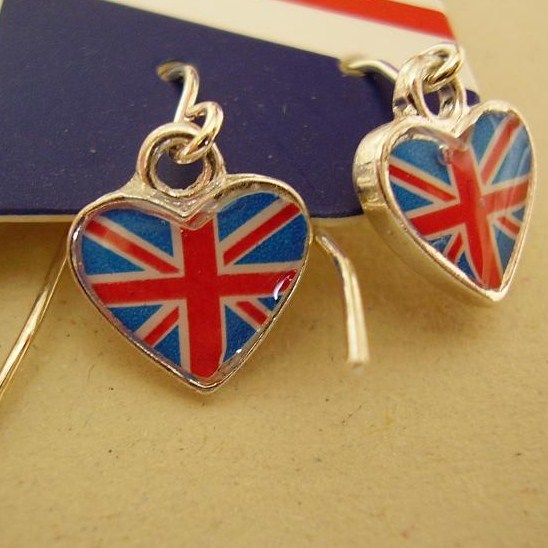
The company responsible for the purse has also created a royal wedding range and I would be surprised if any of it has been made in the UK. They’ve used licensed photographs of the couple on their plates, mugs and magnets which means they’ve had to pay to do so. Another company has avoided this by producing a range called “Royal Wedding” which makes no specific reference to them. You’ll find it in branches of a large supermarket chain, everything from paper napkins to a replica of that sapphire engagement ring. It appears again, in miniature, as a pair of earrings, made in China. The official royal wedding range sold through the Buckingham Palace shop, is made in Stoke-on-Trent, where ceramic goods have been produced for centuries and the profits will go towards preserving the extensive Royal Collection.

I find the failure to provide British made souvenirs for a truly British event like the marriage of Prince William and Kate Middleton particularly frustrating because I keep being told that the UK will benefit from both it and the Olympics. It’s hard to see how we can if there are factories in China just waiting for the news of a royal engagement and capable of turning out thousands of items within days.

The Olympics should be an opportunity for the creative as well as the sporting community of a host country to profit but it seems to me that the benefits and rights of the occasion are shared out amongst corporations long before the circus hits town. The contract to supply enamel pin badges, one of the most lucrative elements of the souvenir industry for the London 2012 Olympics, was awarded to a Chinese company. Many of the twenty-six companies it beat off to win the contract were British - where did they go wrong? I contacted one company that sells enamel badges and according to the person I spoke to there is only one small business still making them in this country. The reasons they aren’t using that manufacturer? Cost and lead time. The profit made on these things is so big that even notching up thousands of air miles by flying them to the UK is no big deal.


It is the small, almost disposable items like badges that bring in the cash, the things that almost everyone can afford. Ask the person managing the shop at any stately home in the UK what the best sellers are and I guarantee that the answer will be erasers, pencils and postcards, because they regularly welcome parties of school children with pocket money budgets. It would be fantastic if all those small basic souvenirs could be made in the UK. A company called Pageantry Postcards is making the effort to produce its goods here and they are typical of the sort of company we should all be supporting. Another, at the more expensive end of the scale, is Colonial Soldier which sells hand carved figures of British soldiers alongside antiques.

I find it extraordinary that a country with such a great reputation for studio pottery does little to promote it to tourists visiting the UK and to organisations such as the London Olympics Organising Committee. Use of the Olympic brand is so tightly regulated that it is unlikely that a local potter could get away with knocking out a few mugs with “Olympics 2012” painted on them. In fact he or she wouldn’t even be allowed to paint on the words “London 2012” without the written consent of LOCOG.

In my opinion it is only legislation and official promotion which will help local artists to genuinely benefit from big events. Discussion and awareness of the issue by local legislators is long overdue. In some cases it is takes simple embarrassment to effect a change but what will it take to embarrass our politicians into changing this?

Think about what you spend your money on when you next take a holiday or mark an occasion. It isn’t just about job creation and national pride. Concerns about human and animal rights should make everyone think twice about what they take home with them. Personally I don’t want to look at something in my home and know that the person who made it is denied rights that I take for granted, nor do I want visitors to my country to believe that I’m happy that British souvenirs are made somewhere like that. It’s nothing to be proud of. There are so many gifted craftspeople and artists out there - make the effort to look for them. They might not be plastering what they make with the local flag but what they create can be just as effective a reminder of a good time.

Guggenheim Museum petition for Ai Weiwei, collaborative artist, Bird’s Nest stadium, Beijing
Olympics 2008


Make a donation to Kate and William’s favoured charities

Thursday, 11 November 2010

Slobs, snobs and hypocrites


“The feckless unemployed will be forced to take part in a punishing U.S.-style ‘workfare’ scheme involving gardening, clearing litter and other menial tasks for just £1 an hour in a new crackdown on scroungers."
"£1 an hour to clear rubbish…new IDS blitz on the workshy” Simon Walters, Mail on Sunday, 7/11/2010

I make a point of checking for little grey yellow blobs and smears in a particular men’s toilet that I have cleaned for the last three years.

Some will know what I’m talking about. For the less switched, on, I am referring to phlegm. The sort you find up your nose. Cleaning the urinals, I can imagine the snot artist digging away at the contents of his nostrils as he empties his bladder, flicking his finds at the porcelain where they cling and harden until I turn up to clean it off. It is unlikely that, having parked his best friend, he washes his hands. So the same finger that has been busy up his nose travels back to the office with its nasty little payload of germs, onto the door handle, the light switch (which he has sometimes embellished with his trophies), the office fruit bowl, that open bag of crisps left unguarded on a desk and eventually to a keyboard shared by any number of his colleagues. All unaware of what they are being exposed to.

This may be the same person who complained because he found some leaves under his car. Obliged to pay the maintenance company even more that year he was really annoyed to see any litter there at all. He called the company and the company called me - it is usually me - to find out what had gone wrong. Nothing, it turned out. Fallen leaves in an outdoor car park are a consequence of having trees around you in autumn. But because this man is hard to please and contracts are hard to come by I was asked politely but firmly to get to work half an hour earlier than usual to sweep away the leaves. I left our dying cat on his own for the twenty minutes until my partner got home from work, and spent money on a fare that I had been saving by walking the three miles to work. And thought about what I would do to the person in question if our beloved moggy died on his own in the meantime.

Personally I don’t have a problem being seen sweeping up litter outside a building but I have found that it has a “Princess and the Pea” effect on colleagues. You’d be surprised at the number of royalty employed in the cleaning industry. I can always tell because when it dawns on them that I wasn’t kidding about clearing litter from the entrance they start to make excuses or just don’t do it. I am now sharing the job with the fifth person in three years. I thought things were going to be better this time until I realised that my new colleague did not want to be seen wearing an overall unless she is cleaning the toilets. Someone might mistake her for a cleaner.

Every time this happens I find myself planning unspeakable fates for the magistrates and judges who use work like this to punish celebrities. There have been a number of Naomi Campbell moments over the last three years as adult women morphed into sulky teenagers for the time it took them to push a brush around a five metre wide space. It doesn’t help that the smokers in the building ignore the “No Smoking” sign at the entrance and drop their cigarette ends there. At least we no longer have to empty out the wall mounted ashtray. I could never hold my breath for long enough to avoid a lungful of the ash that it held and I would stink of it afterwards.

The horrors of the job now lurk indoors, in the toilets. Torn between working quickly to get out of there as soon as possible and trying not to cause splashes, I can’t always avoid being hit on the face by the contents of the bowl. It isn’t the excrement, blood, urine, vomit or mucus that worry me. The boss refers to toilet cleaner as “toilet acid” for a reason.

I sometimes wonder if the people who work in that building realise just how much I know about their guts. The day will come when, having been told yet again that the toilets are not flushing properly, I will stand in the doorway of an office and explain to the occupants that the consumption of junk food/fizzy drinks/eating too quickly/failing to chew results in floaters. I may throw in the fact that by failing to wash their hands after using the toilet they could be treating their colleagues to diarrhoea or flu, that an outbreak of E. coli could, at best, close down their business for weeks. At worst it could kill them. It amazes me that, on a planet where so many people die for the lack of clean drinking water, well educated people fail to use what is freely available to them to wash their hands.

However when I recall the gifts they have left for me in those cubicles I suspect that some of them were raised in a barn before they hit university. Special mention goes to the woman who must have leaned forward during a bowel movement, depositing a broad pile of excrement on the ledge of the toilet bowl, under the seat. By the time I arrived this had hardened and it took me over half an hour to soak it off. Thanks for that, princess. People are particularly thoughtless when it comes to rubbish. A dagger-like piece of broken glass, coated in who knows what, pierced a bag and scored a deep scratch through denim and into my calf when I worked as a caretaker.


You won’t be surprised to learn that I don’t wear couture for the job in fact, even when they have been washed, the worn jeans, tops and fleeces are stored away from the smarter clothes. Count yourself lucky if you wear nice clothes to work. I look like a rough sleeper which may be why I am sometimes spoken to as though I have serious learning difficulties. The worst snobs are not the bosses. It tends to be the underlings who’ve had a hard day that pass on the misery. They look up to their boss because he/she pays them. They look down on me because I clean the office. I know my place.

It’s almost funny that those who have been on benefit for a long time are being threatened with a similar experience at £1 an hour. At £6 an hour (the Mayor of London regards £7.85 per hour as the living wage for my area) it is already a punishment. I don’t know if the proprietors of cleaning companies are rubbing their hands at the prospect of having so many contracts and employees available to them at a discount but I do know that the value of my work has risen over the last three years, even if my pay has not. They are charging even more for the same services and it shows in the way that every failing is now noted and reported. I don’t blame them for asking that they get what they pay for. I just wish they’d realise that I haven’t gained from the increase.

Few seem to understand what life would be like if there was no one to sweep and clean. The kinder ones say things like “I don’t know how you stand it. I couldn’t do it.” But they don’t seem inclined to pay me more for doing it. On the occasions when a colleague failed to turn up for work in an office that my company dealt with there was a degree of panic as they tried to replace a rubbish bag without breaking a fingernail. The sort of fingernail that would pierce the latex gloves I use when fishing out a floater that refuses to be flushed away. Some of them treat you as if you aren’t there which usually brings out the worst in me. Doing my own work as well as that of an unreliable colleague one evening I heard one executive ask another if “they” had shown up yet. “They will get there when they are ready because they only have one pair of hands!” I snapped. I think his mother must have been the last person to have spoken to him in that way because a) I got away with it and b) he left looking rather sheepish. “They” is actually an improvement on “the girl”. Especially as “the girl” is forty-five years old.

The problem I’ve got is that I am lucky to have this part-time work. I need the sort of job where I am left largely to my own devices, away from crowds, because I have panic attacks and suffer from agoraphobia. That makes it hard to find anything better paid that makes use of my skills. I find it irritating that some people think I’ve ended up as a cleaner because I spent my time at school looking out of the window. For this I wrote essays.

I am concerned that those obliged to take part in a “workfare” scheme may find that once involved in unskilled work it is hard to get clear of it. Cleaners in particular find it difficult to find anything other than part-time work, which means they probably won’t notch up National Insurance payments or get sick pay. To make any significant money they have to get several jobs which means spending money on fares and working unsociable hours. There are few opportunities for promotion. Some employers are very cynical about the standard of work and I get angry about the poor reputation that goes ahead of me because some cleaners are so lazy and unreliable. But when you think about how little we are paid for what we are expected to do it isn’t surprising.

The consequence of the low pay and stigma associated with menial work is that it will nearly always be done by the desperate, usually immigrants. Virtually everyone I have come across lately sweeping up litter has belonged in this category. They have travelled halfway around the world only to have others look down on them yet they are grateful for the money. I grew up in tied accommodation in a very affluent part of London, a few doors from a Middle Eastern family who did not let the fact that they lived in a small mews house stop them from having a live-in maid. This qualified teacher had left her child in the Philippines to sleep on a kitchen floor in Knightsbridge and sent all her earnings home. At the time her government took a cut of the money earned by its émigrés.

For a while I cleaned a flat for a Sudanese family whose relative brought her maid with her when she visited. This woman, who was of African rather than Arab descent, never spoke, raised her eyes or looked at anyone directly. Both her employer and mine reminded me of spoilt cats. I once pushed the beds apart in the children’s bedroom and found an upturned plate of food on the floor. She couldn’t be bothered to check if her sons had eaten or to clean up after them, leaving them in front of the television with their meal.

I had hoped to find something better within months of getting my present job but I’m still there. At the moment it is just about worth it but the proposed increase in fares will mean that I am earning money simply to pay the fares. As it is I only use public transport to travel to work and walk for an hour to get home. This costs me a round a tenth of what I earn. I did walk both ways for a while but it almost finished me off. A six mile round trip with a stop to clean fourteen sinks, eleven toilets, six urinals, wash eight floors and/or vacuum and dust a six storey building. I‘m not that good. The really desperate may have to be.

“Our changes will make work pay and create the biggest package of back-to-work support ever seen. Asking someone who has been out of work for a long time to get involved in a programme of work to boost their self esteem is not a recipe for despair, but a way to repair their shattered lives.”
Iain Duncan Smith