Showing posts with label heritage. Show all posts

Wednesday, 27 July 2011

Thirty minutes


It is hard to believe that this screen of ubiquitous buddleia, scenting the suburban air, hides a railway line that has triggered intense debate, caused thousands of people to protest, and made a minister of state into a figure of hate. It is often referred to as “the Chiltern Line” and if the government has its way it will be the route for HS2, a high speed rail link connecting London to Birmingham and reducing the time of the present journey by about thirty minutes. What could you do with thirty minutes? Start the clock.


Spend your thirty minutes trying to complete a public consultation document, bearing in mind that it has been drawn up by someone who wants you to fall into a trap, to make you say that you actually do want a train charging past your home at over 200 miles an hour, that you have no objection to years of construction work, that you believe every word they say about noise levels. You left school to get away from this kind of thing and here you are taking an exam to stop your home becoming worthless, to justify the years, decades of work you put into paying a mortgage. You take advice, watch videos, listen to the experts before you answer “no” to everything, in a desperate attempt to save all that effort and sacrifice.


Think of all those minutes and half hours spent in a job you hate, gritting your teeth to get through one more day, hour, minute without flinging your letter of resignation at the boss, all for nothing because you are a nimby, small fry, nothing to a man whose salary you pay but didn’t vote for. Another nameless face in the crowd at a demo, along with all the other unwanted little people who have cluttered up his day, getting in the way of “progress”.

You will never be one of those gaining that extra half hour on a train moving so fast that the rest of mankind becomes a blur. You will never afford those plush seats and wonderful service. You will wait with all the rest on a station platform waiting for a worn out train that has been held up, again. Because there is no money to improve what already exists, what you can afford. You will sit in your car, on a bus, in a jam caused by the years of construction work that you are paying for to build a railway line you don’t want, can’t afford, don’t need. You will grind your teeth and curse those who inflicted this upon you and your lowly kind and know that you are helpless. You don’t count, your kind never have.


Thirty minutes in a bluebell wood, deafened by birdsong yet wishing you could make less noise as you walk amongst trees that were old when you were a child. A thousand cobwebs and caterpillar threads cling to your arms as they must have done to those of your ancestors when places like this were vast and untouched. You are the first to walk here today, in a place that has never changed and you thought never would until the minister expressed his opinion. Knowing that you are barely a heart beat in the time it took to make this place that cannot be replaced, replicated, remade. Thirty minutes, a pin prick in time in this woodland set like sapphires and emeralds amongst the coral of suburban rooftops, one last place to remember what it must have been like in this land before “progress” came and ate away at your soul. Time counts for nothing here.


Half an hour at an estate agent’s office, listening to all the advice he can give you on how to sell a worthless house. Paint the walls a neutral colour, thank God you redecorated some of it last year, it will take less money, less time. You’ll get the downstairs lav done in thirty minutes. Put the “For Sale” sign up and hope to hell that the neighbours don’t put one of those bloody posters in the window, hope that whoever takes the bait doesn’t check up on what that means. Keep your fingers crossed for a lot longer than thirty minutes, through every rare viewing, trying not to wince when “it” gets mentioned until you realise that they were just curious, not serious, bad luck. Wish that the things that once made your home such a bargain (“Five minutes walk from the nearest station!”) weren’t the things that make it so undesirable now.

The worst half hour is the one spent listening to your tearful elderly neighbour, born in her house, the one she hoped to die in. Listening to the despair of a woman who cannot fill in a form at the best of times and is rendered incoherent at the thought that her childhood home might be demolished, just another of the worthless small fry who will be swept away for the greater good. She loves her garden but even that has made her a target for the mockery of businessmen. She doesn’t own a bowler hat and her lawn is tiny, a postage stamp of green, but she knows each lily and rose, remembers the ones her mother planted and loves them still. It has taken many a half hour to make this patch of heaven and it was worth every moment.


Wonder, sometimes, how long it would take, how many pills, how much booze, to take the problem away forever. How many of those affected regularly spend thirty minutes that close to edge, when the worry becomes too much - “Why are you crying Mummy?” - when there is no fight left and despair takes over. When you begin to think that all the effort is pointless, that all those half hours have been wasted and you are worn away to nothing, for nothing. Knowing that, when the dust that can never settle makes its way, every day, into your home, your precious half hour will be frittered away by a business man, distracted by the many pleasures in that brand new temple to retail - the station - rushing off half an hour late in a wasteful carbon heavy cab to the appointment he might have made, had he been more mindful of those thirty minutes.

Stop HS2 - advice on completing the consultation document
Stop HS2 natonal petition

Tuesday, 26 July 2011

A greener shade of blues

A twenty minute walk from my house brings me to a supermarket, once the Granada Cinema, where The Rolling Stones played a gig in 1965. Fifteen minutes away in the opposite direction is an apartment block, the site of the Oldfield Tavern where in 1962 a drummer called Keith Moon auditioned for a band called The Who. They played gigs there throughout 1963 at the Music Club which also hosted Screaming Lord Sutch and many others. It is easy to imagine these young men travelling through the green and pleasant suburb of Ealing, ready to set the world on fire with their sound. With such an impressive musical history it is hardly surprising that Ealing holds an annual festival and this year I made the effort to attend the blues event held in Walpole Park.


At £4 for a day’s entry it is extraordinarily good value. The event is held in what used to be Sir John Soane’s back garden, just off a high street lined with the usual stores. The sun shone on this particular day, but had it proved wet and muddy, the day-glo wristband I was issued with would have allowed me to nip out to Marks and Spencers for some clean clothes or into Pitshanger Manor to dry out. In some ways this is part of the problem with this event and I’m afraid I did have a problem with it.

As at any other music festival there were the usual stalls flogging dream catchers and ethnic clothing but while I was there hardly anyone was buying because the age group for that kind of thing was barely in evidence. In fact the image I took away with me was of the many foldaway chairs that almost filled the main tent. I’ve seen these things advertised in the Observer colour supplement but until now I didn’t know that anyone actually bought them. They even outnumbered the pushchairs, and there were a lot of those.


Once parked in these things their owners just seemed to sit there, a few feet away from bands that were giving it their all. Occasionally someone would head to or from the bar with a beer which they would then place in the specially designed drink holder on the arm rest. They actually used it. How uncool. I found it hard to determine whether any of them were having a good time. I could have got it wrong. Perhaps these were the same people who sat listening reverently to singers in clubs in the sixties and they are still doing it fifty years later. On the other hand it might be that the worthy citizens of the borough were just making sure they got their money’s worth from a council subsidised event. Enjoyment didn’t appear to come into it.


On the smaller South Stage Sam Kelly’s Station House revue featured singer Debbie Giles, TJ Johnson and local guitar player Lally. A group of accomplished musicians who clearly love performing together, they sounded really tight and even though there were some foldaway chairs in evidence their occupants managed to behave as though they still had a pulse. The band were enjoying themselves and had nothing to prove.

Sandi Thom was promoting her new blues influenced album, “Merchants and Thieves”, on the main stage. Perhaps 3pm was just too early a slot but it was a shame that a talented and fresh blues voice was exposed to such a dozy audience (the obligatory dancing drunks didn‘t count). It wasn’t helped by the number of photographers, amateur or otherwise, who began to pop up during her set, to the point where a security guard intervened. This drew the wrath of one man who deliberately encouraged two small boys to dart about right in front of the stage with cameras for the rest of the performance, distracting to everyone and unbelievably rude. I was standing well away from the stage but put my own camera away out of embarrassment.

A great singer, I think Sandi deserved a better reception and I hope that if she returns to Ealing she and her excellent band will be treated with more respect. Another Scot with a particular affinity for the blues, she has embraced them and made them her own. I loved the fact that someone who has had a single at number one in seven countries was still prepared to sell t-shirts and CDs herself and sign them afterwards. She even unwrapped mine for me when I just stood there, star struck! This seemed to be the only opportunity to buy music at the event and although I realise that the download is now king, it seemed strange that this should be the case along with a lack of t-shirts, a staple of every other gig I’ve been to.
  Music fans struggle to pay for and attend gigs in muddy fields in the middle of nowhere but this conveniently situated one is so cheap and safe that it might as well be a funfair. The local council supports it because it brings more money to the area, generating another layer of income. My impression of Ealing’s annual blues festival is that is a place where people come to socialise rather than celebrate a musical genre that grew from the pared down wisdom, wit and humour of impoverished African Americans, expressed in the most beautiful soul searing way. At this event the music is almost incidental. I went home while it was still light. If I had paid more perhaps I would have stayed all evening to get my money’s worth.

The Stones fell in love with music which evolved in prisons, farms and shacks, far from the comfortable suburbia they grew up in, and had respect for those who made it. I wish Ealing was a magnet for young guitar based musicians and genuine fans, an up and coming generation to ward off the onslaught of over commercialised plastic pop but I’m not sure that you can recreate New Orleans in London without making the area a place where they can flourish and perform with fewer restrictions. The Stones and The Who came about because there used to be so many pubs, clubs and other small venues where they could perform and find each other. You seem to need expensive licenses for everything now.


I have a great deal of respect for the organisers behind the event because they do actively promote Ealing’s blues heritage. My criticism is not aimed at them. I feel very strongly that it requires the intervention of a younger generation that genuinely loves that music, sees what Jagger saw in it and actually performs it. Council grants and worthy people who use the drinks holders on their foldaway chairs are no substitute for a respectful and truly appreciative audience.

Saturday, 23 April 2011

Made in China 2: Something to remind you


Just in case you’ve been on Mars, two major events are on the horizon that will be especially significant for Londoners.

The first is a royal wedding, an occasion when at least two of those involved will probably wish they could just get on with it without all the attention. The second is the 2012 Olympics, an occasion where all of those concerned hope for lots of the right kind of attention (a sports festival free of corruption/scandal/performance enhancing drugs - don‘t hold your breath).

What they have in common is that they will provide opportunities for a great many people to make an awful lot of money, in some cases by selling something truly awful.

Having perused gift stalls in the stifling heat myself, I can understand why someone saw a certain item and thought of me. They were thirsty, their feet hurt and they felt they had to get me something. Besides, everything looks terrific in strong sunlight. Bad taste isn‘t really why I‘m raising this issue, if someone cares enough to buy me a gift on their holiday I should be grateful for it. What winds me up is how often I turn these things over and see the words “Made in China” on the back.

One of the ugliest gifts to grace our home was a nightlight holder from Lanzarote, nasty to handle and impossible to clean because it was so rough, a humorous reminder of the black volcanic landscape of the island. It was horrible but at least it had the virtue of being made in the place that it represented! Its maker is holding their own against an onslaught of foreign made souvenirs.

If, as I do, you live near a big city that attracts tourists, take a look at what’s on sale to those who spend their hard earned money in your country. Take a long hard look at the things that some retailers have chosen to represent you, your culture, your home. Remember, they’ll see them and they’ll think of you.

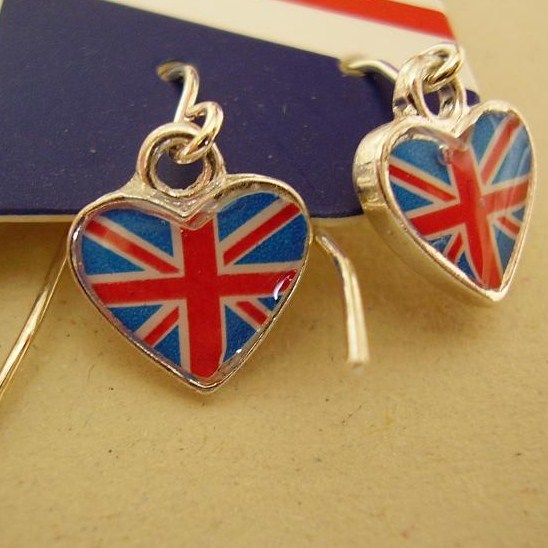
Walking past a shop in a local station overflowing with items aimed at visitors, I’ve always wondered where the small plastic Union flag purses were made. So in the interests of research I bought one and found that it was, of course, made in China.

I doubt if those buying these purses really give a damn where they were made, they probably just want something cheap, but I’m beginning to wish that they did. “Souvenir” is a French word meaning “to remember”. If the people who buy these things want something to remind them of the time they spent in the UK I would rather it was actually made here and reflected the good design we are capable of, however cheap the item.

Those plastic purses are made by a British company and according to their website they design what they sell. At one time they also made their products in the UK. All sorts of reasons get cited for the transfer of production abroad by companies like this. Top of the list is that it is often cheaper to manufacture goods outside the UK. Lower costs, fewer regulations, quicker production and supply of short runs all figure in the reasoning behind a move abroad. It makes for a wider profit margin and you could argue that, as the company is based in the UK, it’s a good thing because the profits stay here. However, lower costs means lower wages. Fewer regulations can mean poor working conditions and little or no trade union representation. Speedy supply and short runs? Pressure to work long hours in a job with little security. It also means jobs lost or never even created in the country that these souvenirs are supposed to be a reminder of.


The company responsible for the purse has also created a royal wedding range and I would be surprised if any of it has been made in the UK. They’ve used licensed photographs of the couple on their plates, mugs and magnets which means they’ve had to pay to do so. Another company has avoided this by producing a range called “Royal Wedding” which makes no specific reference to them. You’ll find it in branches of a large supermarket chain, everything from paper napkins to a replica of that sapphire engagement ring. It appears again, in miniature, as a pair of earrings, made in China. The official royal wedding range sold through the Buckingham Palace shop, is made in Stoke-on-Trent, where ceramic goods have been produced for centuries and the profits will go towards preserving the extensive Royal Collection.

I find the failure to provide British made souvenirs for a truly British event like the marriage of Prince William and Kate Middleton particularly frustrating because I keep being told that the UK will benefit from both it and the Olympics. It’s hard to see how we can if there are factories in China just waiting for the news of a royal engagement and capable of turning out thousands of items within days.

The Olympics should be an opportunity for the creative as well as the sporting community of a host country to profit but it seems to me that the benefits and rights of the occasion are shared out amongst corporations long before the circus hits town. The contract to supply enamel pin badges, one of the most lucrative elements of the souvenir industry for the London 2012 Olympics, was awarded to a Chinese company. Many of the twenty-six companies it beat off to win the contract were British - where did they go wrong? I contacted one company that sells enamel badges and according to the person I spoke to there is only one small business still making them in this country. The reasons they aren’t using that manufacturer? Cost and lead time. The profit made on these things is so big that even notching up thousands of air miles by flying them to the UK is no big deal.


It is the small, almost disposable items like badges that bring in the cash, the things that almost everyone can afford. Ask the person managing the shop at any stately home in the UK what the best sellers are and I guarantee that the answer will be erasers, pencils and postcards, because they regularly welcome parties of school children with pocket money budgets. It would be fantastic if all those small basic souvenirs could be made in the UK. A company called Pageantry Postcards is making the effort to produce its goods here and they are typical of the sort of company we should all be supporting. Another, at the more expensive end of the scale, is Colonial Soldier which sells hand carved figures of British soldiers alongside antiques.

I find it extraordinary that a country with such a great reputation for studio pottery does little to promote it to tourists visiting the UK and to organisations such as the London Olympics Organising Committee. Use of the Olympic brand is so tightly regulated that it is unlikely that a local potter could get away with knocking out a few mugs with “Olympics 2012” painted on them. In fact he or she wouldn’t even be allowed to paint on the words “London 2012” without the written consent of LOCOG.

In my opinion it is only legislation and official promotion which will help local artists to genuinely benefit from big events. Discussion and awareness of the issue by local legislators is long overdue. In some cases it is takes simple embarrassment to effect a change but what will it take to embarrass our politicians into changing this?

Think about what you spend your money on when you next take a holiday or mark an occasion. It isn’t just about job creation and national pride. Concerns about human and animal rights should make everyone think twice about what they take home with them. Personally I don’t want to look at something in my home and know that the person who made it is denied rights that I take for granted, nor do I want visitors to my country to believe that I’m happy that British souvenirs are made somewhere like that. It’s nothing to be proud of. There are so many gifted craftspeople and artists out there - make the effort to look for them. They might not be plastering what they make with the local flag but what they create can be just as effective a reminder of a good time.

Guggenheim Museum petition for Ai Weiwei, collaborative artist, Bird’s Nest stadium, Beijing
Olympics 2008


Make a donation to Kate and William’s favoured charities

Thursday, 24 March 2011

Cherry blossom days


In the days following the momentous events in Egypt earlier this year I heard a brief exchange between a woman and a young man. She had not been able to hear what he had called out to her across the road.

“Sorry?”
“I said, I like you better without the hat!”
“Oh. Right.”

I told her I thought it was a compliment and would have forgotten it if it were not for the fact that she was a sturdy, no nonsense British police woman and he may well have been Egyptian . For a moment, thousands of miles away from Tahrir Square, the uniform that she wore represented so much more than it did to the average Brit. In Egypt the police had been obliged to withdraw from the streets, hiding away from an enraged population who had finally had enough of their corruption and cruelty.

As I grew up in London it was impossible to ignore the many refugees who regarded it as a place of safety. They brought with them their food and customs, for the most part keeping them behind their front doors unless a bond was formed with neighbours or business contacts. Most of the time they did not confide their reasons for fleeing their countries. When they did, it was often a shock to those who had grown up in a free and democratic society, even hard to believe.

Hardest of all to hear was the news that someone my family had come to like had died a prolonged and dreadful death at the hands of people who had lured him back to his former home. We came to understand why the children next door would not drink perfectly safe tap water. A childhood in Beirut meant a mistrust of any that did not come from a bottle as you never knew whether damage to pipes had led to contamination. I watched their mother pull handfuls of crumpled £20 pound notes from the pocket of her fur coat in Harrods toy department to pay for anything that would take away her little girl‘s memory of being kidnapped. Her au pair wept as she watched Sadat and Begin make peace on our television in 1977.

When I moved to the suburbs I found that I had not left these sad, sometimes terrifying tales behind me. There are pockets of the rest of the world all over the outskirts of every British city. From the restaurants and cafes where proprietors wait for the lunch time rush to the empty offices where cleaners spend their evenings, there is always someone who remembers long ago and far away, a time when things were better. Last night the scent of hyacinths wafted towards me which, at this time of year, speaks to me of Iran and exile.

Some of the best stories come from minicab drivers. I used to hear a lot about the former life of a young Sri Lankan, a former policeman who had been obliged to leave his wife and child behind when he fled from death threats. He pulled over to show me the scar on his leg, sustained in an accident, and gave a graphic account of what it is like to be in a car while being attacked by an elephant. He was waiting for his family to join him but I have not seen him since before the Boxing Day Tsunami of 2004.

In the suburbs we have the pleasure of seeing blossom at this time of year as the trees whose ancestors were brought back from the East give us a brief but lovely show. In Japan there would have been picnics under the trees as they came into bloom, spreading from the south in a wave of creamy pink. This year the picnics and celebration of Spring have been forgotten as the country comes to terms with the aftermath of the latest tsunami.

Here, anyone who looks even slightly Japanese is avoiding eye contact in case someone mistakes their nationality and expresses their sadness. It is hard to know what to say when I do encounter someone who is actually from Japan. The enormity of what has happened is hard to take in. In a matter of days all those petals will fall and clog up the ventilators in cars parked along the street and create sticky drifts in the gutter. There is nothing to make me think that those trees will not blossom again next Spring but for many people thousands of miles away it must feel as though the world has come to an end.

British Red Cross appeal for Japan
Shelterbox
Save the Children

Saturday, 25 September 2010

Mention the war


These shoes have been around for as long as I can remember. They have moved from the bottom of one wardrobe to another but they are still with me, a relic of World War Two. Along with a copy of “Make Do and Mend” they are some of the ordinary things I own that are left over from an extraordinary period in Britain’s history.

Recently there has been considerable and deserved mention of the deeds of the RAF during the Battle of Britain. For those who now live in London’s suburbs it is hard to understand the degree of fear and danger experienced by the ordinary people who lived in those houses before we did. Here and there you will find structures, both overgrown and reused, that were built as part of the plan to defend the UK. There are of course memorials to those in uniform but very little remains to remind us of the impact on everyday life.


When I visited Medway Drive in Perivale I could see nothing to indicate that six people were killed and thirty others injured in this quiet street near the A40. I was looking for a gap in the terrace filled by a post war building. Mindful that a surprising number of that generation still live in the houses they were born in I looked for someone in the right age group and struck gold. I was introduced to someone who had lived in the area since 1935 and remembered the incident very clearly. A parachute mine came down here on the night of 25th September 1940 and King George and Queen Elizabeth came to inspect the damage. Photographs taken at the time show them striding up the street in the company of the mayor and local officials. I was amazed to learn that the damage was repaired straight away and found that one of those I was speaking to, a child at the time, had been paid a penny a day to brush clean the salvaged bricks for reuse. The houses in this street were then no more than three years old and I suppose restrictions on the use of building materials were yet to be imposed. It is now impossible to tell that anything so devastating happened here.

Within minutes we were talking about the difference between an Anderson shelter and a Morrison shelter, what it was like to hear a Doodlebug (apparently it was when the whistle stopped that people began to run in all directions) and how one milkman coped during an air raid. They remembered the spivs at the dog track and the people who did not survive. They mentioned the policeman who was not provided with a free shelter (he earned too much) and sent his daughters into the neighbour’s for safety. There were memories of particular raids and of a woman who turned up to work at Sainsbury’s in Greenford with bandaged hands, still trying to work out how they got burned as she rode along on her bicycle.


It was a frightening time. Huge craters were the reminders of near misses. One of my new acquaintances described how he was on a paper round when the warning went out. He rushed under cover only to feel a great weight suddenly crushing him. He thought he had been hurt but in fact a woman had seen him head for shelter and leapt in after him. His friend told me that on hearing a blast and unsure as to what to do he had stood rigid with fear while his sister dived to one side. He had every right to be terrified. Five days after Medway Drive suffered casualties six enemy aircraft dropped bombs in the vicinity of Mornington Road in Greenford, though they were in fact trying to hit RAF Northolt, their gunners taking the opportunity to strafe the ground. A six year old boy called Keith Peters was shot, one of thirty-seven people killed or fatally injured in the daylight attack. His home was damaged beyond repair and then targeted by looters. What must it have been like for his mother who after the war lived in the rebuilt house until her death? It is unlikely that the present occupant of this address is aware of its sad history. On a quiet day in suburbia, almost seventy years after the event, it is difficult to imagine the sudden terror that descended upon the people here.


I used to wonder what these mounds in Hanger Hill Park were all about. Apart from the lumps and bumps there is a concrete block at the end of one and a scattering of concrete squares that seal off the entrances to an air raid shelter. Again there is nothing to tell you that this was the site of several deaths in 1940. It seems that even for those who managed to reach a shelter there was no guarantee that they would make it through a raid. One of the people who died here was known to my friend in Medway Drive, a man who had thrown himself on top of his wife and succeeded in protecting her.

There was a matter of factness and absence of anger in these recollections from two men who would have had every right to feel bitterness towards the enemy. When I hear John Cleese mutter “Don’t mention the war!" and harangue his German guests in an episode of “Fawlty Towers” first broadcast thirty years after the end of the war I still hold my breath, aghast. It was meant to shock and was not aired in Germany when the series was originally shown there but I wonder how it would have gone down in the Britain of the 1940s?


Take a look at the archives of photographs from this period and you will see nothing but smiling faces. Land girls digging up potatoes in Greenford, in fields that have long since been built on. The mayor’s wife collecting clothes for the children of factory workers. A man sitting in the ruins of his house but beaming at the camera as if it was the funniest thing that had ever happened to him. Perhaps he was in shock or just glad to be alive, who knows? It is possible, even probable, that the less positive images were quite deliberately erased from some memories as well as from archives. Like shoes pushed to the back of a wardrobe the bad times were put to one side.

They kept calm and carried on, railwaymen, nurses and doctors, firemen, the WVS, shop workers who swept up the broken glass time after time, the makers of endless cups of tea and strangers who held a hand until the final moment came. Air raid wardens who must have seen things that gave them nightmares, bodies blown to pieces including those of people they knew. This former ARP hut which is at one end of Ealing Village now shelters bicycles.


In 1940 these people had no idea how many weary hungry years of war lay ahead of them. When it was finally over the world had been turned upside down and many saw this as an opportunity to put new ideas into practice. I wonder if we would have had the NHS if it were not for World War II? I hope that in years to come as much will be said about the valiant efforts of those who kept the home fires burning as has been said of those in uniform. It is up to us, the generations who gained from what they did, to recall and applaud their bravery and sacrifice.

For Violet, who drove ambulances during the war and was particularly fond of Marlene Dietrich. Thank you for the shoes.


I am indebted to my long suffering partner, who not only acted as chauffeur and advisor on military stuff but provided me with the excellent “Ealing, Acton and Southall at War” by Dennis Upton (The History Press), in which I found the information about the attack on Mornington Road.

Wednesday, 4 November 2009

Red for a reason


We are a few days away from Remembrance Sunday and Armistice Day. On Saturday we got our poppies from a Royal British Legion collector in Ealing and slotted them in where we could. I have seen them on people I would not have expected to have been wearing them. I have worn one every year since childhood, my mother expected it of me and as I grew older if I hadn’t already bought one myself she would provide it. When the words “Haig Fund” disappeared from the centre I noticed it. If I ended up with one that had a leaf as well as a flower I felt a little smug. For years I’ve wondered why they didn’t make ones with pins.

Papaver rhoeas, the cornfield poppy, grows easily in the disturbed ground of battlefields and it was a common sight to those who took part in the First World War. A Canadian surgeon called John McRae immortalised the image of silky blood red flowers amongst the crosses that, in 1915, were already marking the first of millions of graves in his poem “In Flanders Fields“. Many still lie where they fell, waiting to be discovered by the turn of the plough.

Red poppies were eventually sold as fundraisers by the British Legion which was founded within three years of the end of the Great War to act as a voice for ex-servicemen (it became the Royal British Legion in 1971 following the granting of a Royal Charter). White poppies were first sold in 1933 by the Co-operative Women’s Guild who wanted to support the many disabled veterans and prevent further wars. They are now provided by the Peace Pledge Union.

Over the years I have seen a few white poppies worn by old soldiers in the parade past the Cenotaph in Whitehall but the vast majority wear red ones. I haven’t taken much notice of white poppies or those who wear them until now but they were brought to my attention by someone on Facebook who was encouraging members to join the White Poppy group that has been set up on the site. I followed the link to the official website and ended up feeling quite angry as a consequence. It wasn’t just that they had used the image and story of Harry Patch, the last remaining WW1 veteran, to promote their cause.

I object to the assumption that seems to have been made by some white poppy wearers that those who wear a red one are absolutely in favour of war. If a similar, negative generalisation was made about those who promote the white one there would be an outcry from the media savvy anti-war movement. Old soldiers are usually the first to tell you that war is a terrible thing. They don’t need lessons from a generation saved from conscription by a standing army made up of volunteers.

These volunteers sometimes do what they are ordered to even though they do not have much faith in the politicians who send them to war. They go back into the theatre of operations in spite of a lack of adequate equipment and their own fears. It is the efforts of people like this that has made it possible for others to talk about and live in peace. They don’t just go to kill - they build essential bridges, repair schools and hospitals, train police forces and armies. Sometimes they do it in their free time because they want to help, encouraging their friends and families back home to fundraise for that cause. The five British soldiers whose deaths were announced today died alongside two of the Afghan policemen they were mentoring. They were doing something positive.

On its Facebook page the White Poppy group states that “The White Poppy symbolises the belief that there are better ways to resolve conflicts than killing strangers.” The Peace Pledge Union believes that the solution to situations such as Afghanistan is a UN force. Try telling that to the British soldiers who, under the auspices of the UN, tried and failed to protect people on all sides of the conflict in the former Yugoslavia. Hamstrung by their mandate, they and forces from other countries were obliged to stand back and watch while men, women and children were herded away to their deaths in places whose names have become as familiar to us as the battlefields of the Somme and Ypres were to those fighting in World War One. I’d love to see how those who regard the UN as the cure for all ills would cope with the nightmares that these people still get because they were not allowed to use force.

To make those blue helmets as effective as they should be you first have to sort out the lumbering apparatus that is the UN and that will take some doing. In the meantime are we expected to stand back and watch as another Rwanda, another Bosnia, another Somalia starts up because conflict is a terrible thing? It makes me wonder if those who are against war at any cost have a genuine understanding of the sort of people our forces are up against. How do you reason with those prepared to cut off the purple stained fingers of voters in Afghanistan? How do you talk to men who behead foreign workers because they wanted to feed their families?

Apart from that, I don’t think the efforts of “peacemakers” are always welcomed by those they are trying to help. Live rolling news allowed millions of viewers to see a crude banner made from a painted sheet held up by Iraqis following the fall of Baghdad to US forces. The hotel they were standing in had been a temporary home to foreign peace activists who were hoping to put off air raids. Judging by what it said on the banner the Iraqis they were standing shoulder to shoulder with were pleased to see them go and the cavalry arrive. One of the words rhymed with “bankers”. In 2005 four men, including Norman Kember were kidnapped in Iraq. One of them was shot dead but the rest were eventually rescued by British special forces who had spent weeks looking for them. All those resources used up on peacemakers who should not have put themselves in danger.

I accept that in a democracy we have the right to express an opinion as long as it does not deliberately inspire hate and violence. If a veteran chooses to wear a white poppy I have even more respect for him because he has made his choice based on genuine experience. However those who wear red ones have the right to take pride in their achievements and if that means parading with brass bands then so be it. The guns carried in these parades are for the defence of our country as much as they are for war abroad and I take pride in the men and women who carry them. If it ever became necessary for me to pick up one of those guns myself I hope that I would be able acquit myself as well as they do.

What many of my contemporaries forget or have never learned, cushioned as they are from reality by the freedom made for them from war, is that the true soldier loves peace but it isn’t always an option.

http://www.poppy.org.uk
http://www.poppyscotland.org.uk/
http://www.whitepoppy.org.uk/
http://www.greatwar.co.uk/poems/john-mccrae-in-flanders-fields.htm/
http://blogs.telegraph.co.uk/news/ceriradford/3641401/Stop_the_crusades/
http://news.bbc.co.uk/1/hi/uk/4844800.stm


Monday, 2 November 2009

A pumpkin free zone


I’ve just finished re-reading “The Green Man” by Kingsley Amis in time for Halloween, a total coincidence but a great antidote to the US style “trick or treating” that seems to have taken over the country, largely encouraged by retailers as a way of getting in some more customers in the run up to Christmas.

Published in 1969, “The Green Man” describes the encounter by Maurice Allington, proprietor of the inn of the same name, with the ghost of Dr. Thomas Underhill. Allington discovers that he has a few things in common with the wicked 17th century parson and this connection is manipulated by Underhill. A womanising, alcoholic rogue, Allington spends as much of his time having affairs as he does running his inn. At the beginning of the book he is trying to set up a threesome with his wife and latest girlfriend and his alcohol intake is such that he cannot tell at first whether the apparition is actually down to booze. By the end we learn whether Allington has redeemed himself and conquered his fear of death. Set in a sweaty English summer at the end of the 1960’s this book will keep the winter away for a while. It is worth reading just for the way it evokes that time. One of my favourite characters is the appalling Reverend Tom Rodney Sonnenschein.

I have wondered whether Halloween evolved as a way to deal with a fear of death, the dark, the unknown. In Mexico, they celebrate the memory of those family members who have died on El Dia de los Muertos (The Day of the Dead), on the 1st and 2nd of November. Although skulls and bones are very much in evidence it isn’t about fear. Halloween seems to have developed differently in Protestant countries. I was taught about it at primary school but don’t remember it having the same impact that it does now. The impression I get is that it was something that was marked in the north of England and Scotland. It only gained popularity throughout the UK as a result of US television programmes and films.

I almost gave in and bought one of the large skulls in the window of a shop around the corner but am now glad that I didn’t as they are probably available at half the price now and do I really want it anyway? Apart from that I am not sure whether I want to give in at all to the plastic Halloween that takes over at least one supermarket aisle in September (alongside Christmas). Our experience of Halloween at our current address means that we now turn off the lights and put up a sign asking trick or treaters to stay away.

Years ago we answered the door to a tiny little girl, whose mother was some way off, and wondered what she could be thinking of to let her fragile child do this. I knew that there were a number of loud (if not dangerous) dogs in the street at the time, owned by nervous pensioners. Just having them bark at you could be frightening for an adult so I can’t imagine how a small child could have coped with it. On another occasion the door was answered to loud and demanding knock. A masked child had the wheel of his bike up against the front door and expected to be welcomed with open arms and, presumably, a bucket full of sweets. I can understand that, in the America depicted in “Desperate Housewives”, children are recognised by neighbours who are prepared for this kind of visitor and meet them with all the confectionary their little teeth can cope with. The problem is that I don’t live in Wisteria Avenue, there are hardly any families with children in the street and I wouldn’t recognise them if I tried.

The local Safer Communities Team has recognised that this tradition is not welcomed by everyone. They have been distributing cards to place on front doors with a polite message to put off unwanted callers. It is sad that well behaved children suffer the same discrimination as the nasty ones but I suspect the fact that we did not get any visitors this year is as much about the credit crunch as it is about good manners. I think that parents have been forced to concentrate on Christmas this year. This time around the pumpkins are for eating.

Thursday, 29 October 2009

A pot addict confesses and appeals for help

Well, it got your attention didn’t it? Actually, the type of pot I am obsessed with is the kind you look at, fill with pot pourri or soup. Not the kind you smoke.


I haven’t given in to my addiction to things ceramic for a few years but I have just parted with £25 to help out a talented potter called Kirsty Badham. Her kiln came over all chaotic recently and destroyed some pots-in-progress. In an effort to raise the funds to repair it, Kirsty has offered to make a bowl in return for each of the 100 pledges of £25 that she receives through this site:
http://www.pledgeforapot.co.uk/


Now, I am trying to be helpful by doing this but I also see this as an opportunity to buy a unique and lovely thing at a bargain price - I’m not stupid - at a time when things are rather tight (I have yet to break the news to The Attached One that I have taken this course). In fact, if money was no object I know that we would not be able to move for things ceramic. I’m not sure how or when this need to own pots developed, it may have started at the British Museum where I fell in love with ancient pieces such as those made by the Beaker People. I expect Freud and Jung would see connections with wombs or similar but that’s all too complicated for me. I just like pots.


The last investment of this kind was a week’s wages spent on a bowl by Julia Jefferson. I needed a salad bowl and it occurred to me that I could eat from something handmade and beautiful rather than mass produced. It means a lot of careful hand washing but I still love it. When we brought it home I couldn’t stop looking at it and it seems to have been made for blackberries.


When I actually got the chance to make pots myself things just got worse. I don’t want to mislead you, don’t imagine that I am capable of slapping a lump of clay onto a potter’s wheel and turning it into something resembling a bowl. My efforts were restricted to pieces built from slabs or formed in plaster moulds, incorporating leaves and fabric dipped into slip (liquid clay). As far as I was concerned it was choosing the glaze that was the fun part.


Once I left college (and free access to a kiln, clay, glazes and knowledge) I had to buy my pots from other people, often potters who had stalls at festivals and fairs. I went through an unfortunate phase when I bought every chipped and manky piece of 1930’s crockery that I could find for 50p at car boot sales. Most of these are now living in boxes under my work room table. No Clarice Cliff unfortunately.


Some unusual items have made it onto the walls and into a display cabinet. I dream of eating from plates made by Sean Miller, an urban potter based in my area and one day that will happen. Until then I drool as I sit in front of the screen, perusing craftsmen potter sites. It has been a while so I think I deserve one of Kirsty’s bowls. Can’t wait to see it…

A

Sunday, 25 October 2009

The Griffin is given wings and claws


You are probably wondering what a couple of stone beads have to do with Nick Griffin, leader of the British National Party.

These beads may be thousands of years old. They turn up in the sands of the Sahara and are sold to foreign collectors by the hardy people who live there. A very long time ago someone used very primitive tools to drill holes through two attractive pieces of stone and polish their surfaces. One is probably a piece of agate with some tiny quartz crystals that, even now, sparkle in the light, the other may be a piece of petrified wood. I love them because they are tiny and affordable pieces of ancient history and because they are a connection with my most distant ancestors - Africans.

One of the few intelligent and serious comments made by a member of the studio audience on the BBC’s “Question Time” was in response to the BNP leader’s suggestion that white English people are now aborigines in their own country. She pointed out that, as we are all descended from the first humans who came from Africa, we are all members of minorities now.

I did not plan to watch it. I haven’t in years and I don’t need to see Nick Griffin in person to know that I don’t agree with his views. In the end I watched it online because I had heard so many comments about the programme that I felt I had to see it for myself. Unfortunately my love for the BBC has now cooled a little because what was considered a smart attempt to undermine the BNP‘s growing influence has probably backfired.

Those involved in the decision to invite Griffin to take part in a debate alongside other politicians are clearly out of touch with the sort of people inclined to vote for a party generally regarded as racist and beyond the pale. They made the mistake of treating him differently to any other politician. There was an obvious and open lack of respect from the very beginning. I understand that the audience was carefully selected - I am not sure what criteria were involved in this selection but the impression I was left with was that they chose anyone prepared to boo and shout. The atmosphere was such that I expected to see girls with trays of ice cream (or rotten eggs and tomatoes) wandering up and down the aisles.

Jack Straw has been criticised for his performance on the night. It is easy to forget that, while we often see images of politicians seconds apart on our TV screens, in reality they don’t always meet face to face. It may have been one of the few times that they had been in each other’s presence and Straw was clearly already very angry. Having Griffin raise the fact that his father was a conscientious objector imprisoned during WW2 couldn‘t have helped. It must have taken some guts to do what his father did but Griffin’s comment was a crafty and subliminal message to anyone watching who has sympathy with his views. They won’t remember the fact what his dad did had little or nothing to do with today‘s politics. All they will take in is that, in their opinion, Straw is not made of the right stuff unlike Griffin whose daddy was in the RAF during the war.

The fact is that Nick Griffin came across as a reasonable, well mannered, clearly spoken individual - if you ignore what he was actually saying - compared to the programme’s presenter, most of the panel and the studio audience. What I saw was a gathering of arrogant liberals (with the exception of Bonnie Greer, who I felt was respectful to him) having a night out at the circus, the sort of circus where lions eat people. Griffin has had a lot of practice saying all the things he said on the night. He has said them a hundred times before to television cameras. He would have had a much harder time if he had been asked for his policies on the environment, Afghanistan, Iraq, the postal strike.

More importantly, the people who have some sympathy for his views on immigration and its impact on the availability of resources (as pointed out by Baroness Warsi this, not race, is the issue) will have seen someone they feel represents their views being howled down. It would be an enormous mistake to assume that the average BNP type is still a skin head with a swastika tattooed onto his forehead. It is unlikely that those who make “Question Time” have experienced life in a tower block, waiting years for a transfer to more suitable housing, or been in the queue at the post office watching someone who can’t speak English collect substantial benefits as they wait to get their own meagre pension. I suspect they pay occasional visits to this alternative reality. They don’t have to live there. They can afford to be open minded.

To me the worst thing of all about that broadcast was the complaint made by a woman in the audience at Jack Straw’s repeated use of the term “Afro-Caribbean”. It seems that he should have said “African-Caribbean”. Surely that night of all nights was an occasion for what is a very tiny failure in protocol to be overlooked. A group of people who should have been united against racists have shown themselves to be divided by semantics. I suspect that this woman, who struck me as someone I would like to know in spite of what she said, would regard me with some suspicion for stating my love of things African. Perhaps she would find me patronising. Sometimes you just can’t win but the taste in my mouth is all the more unpleasant for a realisation that the BNP have gained more than they have lost because of the BBC’s lack of judgement.

This Griffin now has wings and claws. The dangerous fantasy of a country run by racists may now become reality. Thanks Auntie Beeb…

http://www.bbc.co.uk/programmes/b00nft24#synopsis


Monday, 21 September 2009

Somewhere else


When I was a small girl I used to spend Saturdays wandering around London with my father. One of our regular haunts was the Arts Council shop which I seem to remember was in Saville Row. The counter near the front of the shop had a display of postcards in front of it which was at my eyelevel and I remember being entranced by a picture that seemed as real as a photograph. I realised that it couldn’t be a photograph as the people in it were wearing strange old fashioned clothes but even at that age (about five) I knew that my drawings would never be that good. The postcard that I went home with showed William Holman Hunt‘s “The Finding of the Saviour in the Temple” and I still have it, along with many more showing the work of the Pre-Raphaelite Brotherhood.

I suspect it was the fact that there were grown up ladies dressed as princesses in their paintings without anyone finding it silly that made them interesting as well but even at that age it was impossible to ignore the skill of these artists. The sunlight of Victorian England was trapped in their canvases and the extraordinary jewel like detail of every flower and strand of hair was a shock to my senses. For a child I had spent an unusually large amount of time in front of well known canvases and although I liked some of them I can’t remember feeling the same way about what I had seen before then.

Whatever the reason for my interest the Pre-Raphaelites still have a hold on me and when I saw that Birmingham Art Gallery and Museum were displaying the Burne Jones “Perseus” series (which belongs to Stuttgart’s art gallery) I suggested (without any hope of his agreeing) that Birmingham might be an interesting place to visit. Bearing in mind that he was facing four hours of driving I was a bit surprised when he said “yes”. The car doesn’t get used for much more than the commute to work a few miles away and shopping so this was a real expedition. We checked out parking in Birmingham’s city centre and he set up the sat nav.

I had intended to get up early but managed to oversleep so we set off later than planned. We live in an area where the suburbs start to break up into industrial sites and scrub so it wasn’t long before we were into open farmland. I don’t think the landscape could be described as particularly dramatic but on the way there and back I couldn’t help thinking how lucky I am to live here. Rolling hills, hedgerows and huge old trees. Cows, sheep and the occasional bird of prey, chilling out on a fence post and watching the traffic.

A visit to Birmingham was an opportunity to see my favourite source of quilt making supplies “in the flesh”. The Cotton Patch even provides a few parking spaces. Crammed very neatly into this small shop are fabrics from all over the world, magazines and books, and everything you could possibly need to make the perfect quilt. I have always wanted to buy one of the many Japanese magazines they have available so, head still buzzing from the motorway, I tried to look through them but then just caved in and bought the first one I had seen. I could have bankrupted myself in minutes there so I stuck to the plan and one magazine was my limit.

The sat nav decided to take us through Moseley via Shirley Green which has a lovely red brick Baptist church. We decided that Hall Green was a lot like Edgware and Moseley was definitely like Southall, even down to the traffic. The architecture is largely Victorian red brick and it occurred to me, as it has in the past, that this sort of thing survives when no one can afford to pull it down and rebuild. Lovely small intimate buildings from the late 19th and early 20th century with the occasional 1930’s bit of Art Deco, battered but still in use.

At last we managed to get into the city centre and after a couple of wrong turns we found the chosen car park. It was a short walk to the gallery past some really beautiful and recently cleaned buildings. That part of the city is pedestrianised and we walked through a mall into a large piazza like area with curved steps where people were sitting in the sunshine. Within minutes we were in front of the strange dramatic grey green canvases and drawings produced by Burne Jones in the 1880’s and 1890’s, displayed against rich teal walls. We are so familiar with Pre-Raphaelite art from reproductions in books but there is nothing quite like the real thing. For one thing the images in glossy coffee table books are sometimes larger than the actual painting. Like the teeny weeny “Death of Chatterton” by Henry Wallis. We mused about “Beata Beatrix” and “Proserpine”, made knowing “we used to be art students” type comments about their techniques and then wandered off to see some of the rest of this surprising gallery. There followed the obligatory visit to the shop to buy some postcards and then it was back into the sunshine for something to drink and, alas, back into the car for the long drive.

Home, backs aching and heads spinning, it was hard to get used to the fact that we had been a long way off and back again in the same day. We ought to do it more often, other people would, but I wonder how many would travel that far because of a few old paintings. Still mad for the Pre-Raphaelites after all these years. And still buying postcards.
http://www.bmag.org.uk/


Tuesday, 8 September 2009

An allotment show in suburbia

On Saturday I went along to the local allotments and gardens association autumn show and dropped off the albums of photographs that I had taken of earlier events. I felt that these should be archived as the membership of the association gets smaller and gardens in the area disappear under concrete. There were many of the same old faces, the same reliable people who have kept things going through good times and bad. A stall selling local honey, another selling bulbs and plants, and work by a local artist.


There is something about the very ordinary surroundings of the church hall that makes the flowers and vegetables on display look even more extraordinary. Spiky orbs of orange and red chrysanthemums against the long maroon curtains, pale wavy discs of squash against the green baize of the exhibition tables. I expect someone does tidy up before it all gets going but no one seems to mind the stacks of plastic chairs and the odd mix of screens. The produce is what counts.

Admission is free to these shows that take place in the spring, summer and autumn but it is taken as read that you buy a raffle ticket when you go in. Prizes include the usual bottles but we won a walnut tree last time. It will be a decade before we get any walnuts out of it but we were delighted.


Some might feel that our association is in something of a time warp but I find the sameness and regularity of these events reassuring. It is low tech and quiet, relying on face to face, human contact and legwork. There is no website or email address. I suspect that these modern facilities would increase the membership but it would trade a special, indefinable quality for convenience. When I walk into that church hall I know that it probably looked very much the same in 1956, and in 1978. All that has changed is the fashion and hair that has either fallen out or turned grey.

When the association was founded almost eighty years ago the area that I live in was a shiny new suburb, built alongside main roads, a few Victorian buildings and a railway line. Property speculators encouraged the founding of garden associations and front garden competitions because the bare patches in front of the new houses did nothing to enhance the look of the place. By encouraging householders to turn the muddy plots of land around their homes into gardens they knew that they would add value to their development without having to spend any more on it themselves.


Within twenty years of its being founded the gaps had been filled in by Tudorbethan and Art Deco semis and the gardens were being pressed into service to help those on the Home Front. They became a vital resource and garden associations came into their own. Once the Anderson shelter had been built the space around it was used to fill the gaps that rationing had left. Suburbanites who would never have been interested in growing potatoes suddenly wanted the advice of those who had been growing them for years. The allotment society was the best place to ask and many more clubs of this kind were founded.


I find it sad that, at a time when the UK is undergoing such a positive change in attitudes to the environment, these associations are disappearing because no one is prepared to run them. Most of those running the one we belong to are retired or very elderly and are actively seeking new organisers. I play a small part by pushing leaflets through doors three times a year and putting a poster in the window but I can’t help thinking that many people pay lip service to the environmental movement but can’t be bothered to part with the £2 annual membership fee or walk two streets to a church hall where these events take place. These associations usually offer a discount to their members which can mean quite a saving to someone on a tight budget. They are a great example of a local, green, community resource and in spite of a renewed interest in growing vegetables they are literally dying off.

There will be a time, not that far away in the future, when we will have to start growing our own food just as they do in Cuba, where every spare foot of land is being put to use. When that time comes we will need all the good advice of the members of such associations to make every seed and drop of water count. Let’s hope that they are still there to help us out.

http://www.britishpathe.com/record.php?id=82416


Tuesday, 9 June 2009

A bit pork and cheese


I’m one half foreign and that foreign is Portuguese. It is not that obvious, diluted by the Scots and Ulster on my father’s side and, of course, by the English culture that has surrounded me since birth (if London’s culture can be described as English). It took centuries of poverty and malnourishment to refine my typically short Portuguese body and I have brown eyes and hair.

If you have a foreign parent it is likely that somewhere in the family home there will be some reminder of their origin. In our house every ornament stood on an embroidered doily, there were plates and dishes painted in traditional Portuguese styles and we had the obligatory brightly coloured ceramic cockerel. My mother and her sister worked and lived close by so I heard the language everyday and there was a lot of contact with the members of her family who lived in London. One of my cousins always put on records of traditional music and danced to them. This mainly consisted of swinging to the right and then to the left and it is good to know that others are maintaining this tradition. In Australia. I swear it all sounds like this. Jingle jingle boom.
www.youtube.com/watch?v=g36oefvywtk

Everything my mother cooked, even if it was supposed to be a British dish, tended to be a bit Portuguese which rather annoyed my father. I think she regarded the indigenous cuisine as lacking in flavour. I grew up eating the home cured meat that was brought over from her village, smuggled through customs in suitcases. Sal picao was a favourite, a sausage that was sliced very thinly and eaten with bread. The chewy slices were a dark amber and garnet colour when held up to the light. Most school friends wrinkled their noses when offered it but some took the risk and found that they liked it. The food that had helped my ancestors to survive hungry winters was regarded as a delicacy in the UK.


On special occasions we ate bacalhau, salted cod fish cooked with finely chipped, fried potatoes, scraps of fried egg and olives. If most of the British visitors to the house had seen the cod soaking in buckets of water for days before being cooked they might also have wrinkled their noses, but once it was on their plates it disappeared fairly quickly. Cod was also used to make fish cakes which could be eaten hot or cold. My mother always made a lot of them but there never seemed to be enough.

Caldo verde, a soup made with shredded dark greens, was a challenge. I was never able to eat it without getting my chin slapped by hot potatoey cabbage. Summer meant green bean salad, the beans warm from the pan and thinly sliced onions in an oil and vinegar dressing served with hard boiled eggs. Puddings and desserts usually involved a lot of work so they didn’t come along that often but when they did the smell of cinnamon filled the house.

We didn’t have much to do with the Portuguese community apart from attending occasional events. I think my mother wanted to get more involved but it wasn’t something that interested my father. I wasn’t even expected to attend Portuguese school which seemed to be mandatory for the others of my age from that background. I wouldn’t have managed it and I think common sense was sacrificed to national pride by some Portuguese parents.

The other thing that set us apart was that we didn’t spend six weeks every summer on holiday over there. A great many of my mother’s contemporaries came over in the 1960’s and 1970’s to work hard and earn money, sacrificing much to save up enough to build a dream home to retire to in Portugal. Almost everyone we knew from that community lived in accommodation that came with a housekeeping job, which meant that quite a few people lived in ugly basements with exposed pipe work and were grateful for it.

Looking back, it is hard to believe that such a large population of very foreign people could live in London without being too obvious. I think the reason was that they just kept their heads down and got on with it, looking ahead to a time when they wouldn’t have to be here. Things began to change when some began to buy houses in the suburbs, but even then the plan was still to go home. I knew several people whose parents lived in the UK for decades but never learnt to speak more than a few words of English. At the time there was no need to and the truth was that many could not read in their own language. Education was not a priority in Salazar’s Portugal. Clever people were trouble.


We did visit my mother’s home occasionally. I went from being slightly foreign in the place I was born to being very foreign somewhere else. My grandmother was the typical little old lady in black and I really do remember her with affection. The whole place was so different from London. There was no flushing toilet, you parked your backside on a wooden seat and whatever you produced was composted. How green is that? My cousin used oxen to draw along a piece of agricultural equipment I had seen pictures of in a book on medieval history and I spent an afternoon watching him irrigate a field by using metal plates that he sliced into the ground, cutting off one channel then another, allowing the river water to run between rows of potatoes. I though they were covered in Portuguese ladybirds but they were actually Colorado beetles. I remember the smell of wood smoke, being taken to see some piglets and lots of sticky car rides as my father took advantage of all that history.

We visited every castle and church in the area and then went even further. We saw Alcobaca on a particularly hot day and I remember stepping from burning sunlight into the chill of the shade. The carved stonework looked like lace. My absolute favourite was a castle that had shallow steps wide enough for horses to be taken up them during a siege. I ended up with all the usual souvenirs, a boat and a doll with lots of petticoats from Nazare, hand embroidered aprons and earrings. I had my ears pierced, whether I liked it or not, by having a sterilised needle pushed through my lobes at around the age of three. This is when they discovered just how many rude Portuguese words I had picked up.


Forty years later I’ve forgotten them, along with most of the Portuguese I knew. I don’t regret it but I always mean to brush it up. When I looked around the house for things to photograph I found that there weren’t that many. I am far more English these days. Amongst the good things that I have gained from being a bit pork and cheese are a taste for embroidery and bean salads. I cry when I listen to Amalia Rodrigues even though I don’t understand most of what she is singing about. I have an insight into what it is like for those who come here from somewhere very different to earn what they think is a decent wage. I hope I am just that little bit more interesting because of it.

www.freguesiasdeportugal.com/distritoviana/09/portuzelo/fotos.htm