
Just in case you’ve been on Mars, two major events are on the horizon that will be especially significant for Londoners.
The first is a royal wedding, an occasion when at least two of those involved will probably wish they could just get on with it without all the attention. The second is the 2012 Olympics, an occasion where all of those concerned hope for lots of the right kind of attention (a sports festival free of corruption/scandal/performance enhancing drugs - don‘t hold your breath).
What they have in common is that they will provide opportunities for a great many people to make an awful lot of money, in some cases by selling something truly awful.
Having perused gift stalls in the stifling heat myself, I can understand why someone saw a certain item and thought of me. They were thirsty, their feet hurt and they felt they had to get me something. Besides, everything looks terrific in strong sunlight. Bad taste isn‘t really why I‘m raising this issue, if someone cares enough to buy me a gift on their holiday I should be grateful for it. What winds me up is how often I turn these things over and see the words “Made in China” on the back.
One of the ugliest gifts to grace our home was a nightlight holder from Lanzarote, nasty to handle and impossible to clean because it was so rough, a humorous reminder of the black volcanic landscape of the island. It was horrible but at least it had the virtue of being made in the place that it represented! Its maker is holding their own against an onslaught of foreign made souvenirs.
If, as I do, you live near a big city that attracts tourists, take a look at what’s on sale to those who spend their hard earned money in your country. Take a long hard look at the things that some retailers have chosen to represent you, your culture, your home. Remember, they’ll see them and they’ll think of you.
Walking past a shop in a local station overflowing with items aimed at visitors, I’ve always wondered where the small plastic Union flag purses were made. So in the interests of research I bought one and found that it was, of course, made in China.
I doubt if those buying these purses really give a damn where they were made, they probably just want something cheap, but I’m beginning to wish that they did. “Souvenir” is a French word meaning “to remember”. If the people who buy these things want something to remind them of the time they spent in the UK I would rather it was actually made here and reflected the good design we are capable of, however cheap the item.
Those plastic purses are made by a British company and according to their website they design what they sell. At one time they also made their products in the UK. All sorts of reasons get cited for the transfer of production abroad by companies like this. Top of the list is that it is often cheaper to manufacture goods outside the UK. Lower costs, fewer regulations, quicker production and supply of short runs all figure in the reasoning behind a move abroad. It makes for a wider profit margin and you could argue that, as the company is based in the UK, it’s a good thing because the profits stay here. However, lower costs means lower wages. Fewer regulations can mean poor working conditions and little or no trade union representation. Speedy supply and short runs? Pressure to work long hours in a job with little security. It also means jobs lost or never even created in the country that these souvenirs are supposed to be a reminder of.
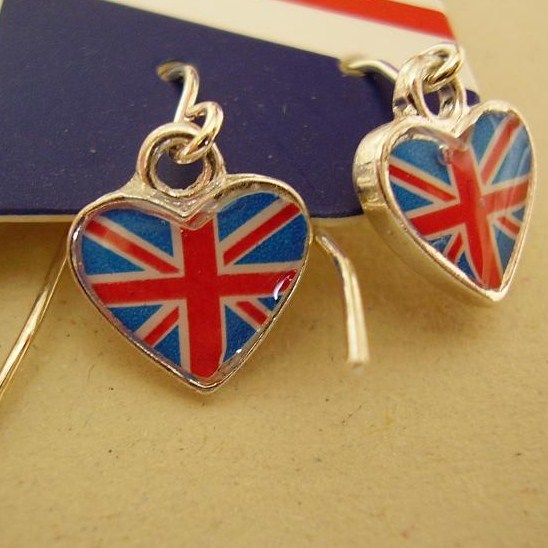
The company responsible for the purse has also created a royal wedding range and I would be surprised if any of it has been made in the UK. They’ve used licensed photographs of the couple on their plates, mugs and magnets which means they’ve had to pay to do so. Another company has avoided this by producing a range called “Royal Wedding” which makes no specific reference to them. You’ll find it in branches of a large supermarket chain, everything from paper napkins to a replica of that sapphire engagement ring. It appears again, in miniature, as a pair of earrings, made in China. The official royal wedding range sold through the Buckingham Palace shop, is made in Stoke-on-Trent, where ceramic goods have been produced for centuries and the profits will go towards preserving the extensive Royal Collection.
I find the failure to provide British made souvenirs for a truly British event like the marriage of Prince William and Kate Middleton particularly frustrating because I keep being told that the UK will benefit from both it and the Olympics. It’s hard to see how we can if there are factories in China just waiting for the news of a royal engagement and capable of turning out thousands of items within days.
The Olympics should be an opportunity for the creative as well as the sporting community of a host country to profit but it seems to me that the benefits and rights of the occasion are shared out amongst corporations long before the circus hits town. The contract to supply enamel pin badges, one of the most lucrative elements of the souvenir industry for the London 2012 Olympics, was awarded to a Chinese company. Many of the twenty-six companies it beat off to win the contract were British - where did they go wrong? I contacted one company that sells enamel badges and according to the person I spoke to there is only one small business still making them in this country. The reasons they aren’t using that manufacturer? Cost and lead time. The profit made on these things is so big that even notching up thousands of air miles by flying them to the UK is no big deal.
It is the small, almost disposable items like badges that bring in the cash, the things that almost everyone can afford. Ask the person managing the shop at any stately home in the UK what the best sellers are and I guarantee that the answer will be erasers, pencils and postcards, because they regularly welcome parties of school children with pocket money budgets. It would be fantastic if all those small basic souvenirs could be made in the UK. A company called Pageantry Postcards is making the effort to produce its goods here and they are typical of the sort of company we should all be supporting. Another, at the more expensive end of the scale, is Colonial Soldier which sells hand carved figures of British soldiers alongside antiques.
I find it extraordinary that a country with such a great reputation for studio pottery does little to promote it to tourists visiting the UK and to organisations such as the London Olympics Organising Committee. Use of the Olympic brand is so tightly regulated that it is unlikely that a local potter could get away with knocking out a few mugs with “Olympics 2012” painted on them. In fact he or she wouldn’t even be allowed to paint on the words “London 2012” without the written consent of LOCOG.
In my opinion it is only legislation and official promotion which will help local artists to genuinely benefit from big events. Discussion and awareness of the issue by local legislators is long overdue. In some cases it is takes simple embarrassment to effect a change but what will it take to embarrass our politicians into changing this?
Think about what you spend your money on when you next take a holiday or mark an occasion. It isn’t just about job creation and national pride. Concerns about human and animal rights should make everyone think twice about what they take home with them. Personally I don’t want to look at something in my home and know that the person who made it is denied rights that I take for granted, nor do I want visitors to my country to believe that I’m happy that British souvenirs are made somewhere like that. It’s nothing to be proud of. There are so many gifted craftspeople and artists out there - make the effort to look for them. They might not be plastering what they make with the local flag but what they create can be just as effective a reminder of a good time.
Guggenheim Museum petition for Ai Weiwei, collaborative artist, Bird’s Nest stadium, Beijing
Olympics 2008
Saturday, 23 April 2011
Made in China 2: Something to remind you
Tuesday, 15 June 2010
Fallen from grace

The fox has is no longer seen as the charming redhead that you help out over the winter with the odd bowl of cat food. Tabloid headlines have put Mr. Fox into the same category as the paedophile. He is no longer fantastic. A mother found a fox mauling her twin baby girls in their nursery after it entered her north London home through patio doors left open on a hot night. Since then the local council has set traps in the garden of the house and destroyed three foxes caught there subsequently.
A number of Londoners, among them the mayor, Boris Johnson, have come forward to declare that foxes are vermin, a nuisance and now, a potential danger. The surprising thing is that just as many have stood up for the fox, pointing out that London and its suburbs have become a free food fest for vermin of every kind. It is not just the kind hearted residents of the city who are to blame. Patrons of take away food establishments do not feel the need to dispose of whatever they have left over responsibly, dumping it anywhere; proprietors leave bags of rubbish in the street long before collections are due because the fines are never big enough to put them off. Add to that the introduction of fortnightly rubbish collections for reasons of economy and it is hardly surprising that the fox and the rat have flourished.
In spite of what has happened I am quite happy to see foxes in our garden. If we keep the doors closed on hot evenings it is because we are worried about the two-legged variety of visitor, the burgling kind. I heard the eerie shriek of a fox for the first time in the suburbs, believing at first that it was a woman’s screams. Then it almost sent me into orbit but I now know that one of nature’s charmers is about. And I have been charmed by the fox. The sight of cubs tumbling over each other on the lawn, of an adult sunbathing on the compost bin, of another loping purposefully along the street ahead of me, I still regard these moments as special, magical. If those strange and dangerous eyes have once looked back into yours from a safe distance they are hard to resist. For those as divorced from wild nature as some town dwellers are it must be hard to resist trying to turn such a creature into a friend with the help of frozen chicken.
My perspective had to change once we became cat owners, not actively discouraging them but the occasional bowls of cat food stopped (I once economised by providing cheap dog food and was treated to the sight of a fox having a sniff and then walking away from it. Everything in its demeanour said “You expect me to eat this?”). We do leave out bowls of water, shallow enough to prevent a hedgehog drowning or tilted to allow an easy escape, that double as a lido for young starlings. I began to do this after seeing a desperately hot and exhausted fox take a rest on the patio. It was too frightened to let me put water out for it and ran off.There was one hairy moment when I glanced out of the kitchen and saw a large fox standing stock still on the lawn with our beloved moggie right next to it. To my amazement the fox ignored Jones as he began to lie down next to it in a submissive gesture, the one that told us that he was due for a tummy rub. By this time my hand had rattled the doorknob and the fox departed in a hurry. Jones didn’t look too unhappy to see me but he didn’t seem frightened either and it has led me to wonder what sort of relationship he had with foxes in his early life as a stray. Most cats don’t win the argument. Nevertheless, when I found three young ones gazing at me expectantly through the French windows one Sunday morning I thought of Jones, at that moment snoring under the duvet, and resisted the temptation to slip them a dish of Felix.
I don’t blame foxes in any way for the problems they cause. They are fulfilling their role in the ecology, scavenging and cleaning up after everyone else and it is not their fault that we provide them with so much work. However I believe that for some the feeding of foxes has more to do with a need to be loved by an outlaw than a genuine desire to help wildlife. We have forgotten that this adaptable survivor has been charming humans for centuries. Very few animals have engaged the attentions of artists, writers and poets in the way that the fox has. Brer Fox, bold Reynard, Disney’s Robin Hood, Beatrix Potter‘s “foxy-whiskered gentleman“ and The Tod in “The Plague Dogs” by Richard Adams, from Aesop’s Fables to Roald Dahl it has been recognised as cunning, sly, deceitful - the Loki of British wildlife. Most recently the fox has been equated with the scheming young women drawn to celebrities in the video for Wiley’s “Wearing my Rolex”.
Perhaps those living within the town walls would be slower to defend the fox if their livelihoods depended on it. The playfulness that leaves our back garden strewn with shoes, rubber ducks and sparkly Christmas baubles is the same as that which leaves a hen coop in a bloody and distressing state. There are those, parents in particular, who have come to understand that a patio covered in faeces is a high price to pay for a glimpse of something wild.
It is time for the authorities, in consultation with local wildlife trusts, to take a rational and sensitive approach to the urban fox, educating the public in the best way to interact with it and acting in all our best interests. A blanket approach which treats all foxes in the same way would be inappropriate, what we need is a fox czar.
The recent incident really worries me. I fear that it will be used by politicians to gain votes by hitting an easy target rather than tackling obvious litter problems and dangerous dogs that Londoners fall victim to every day. Another concern is that the tabloid reaction to it will give permission to thugs to torture and kill foxes. They will use the same dogs that I worry about to carry out this task and then celebrate with a take away. One of the saddest interviews I heard following the attack was with a teenager who described the foxes in her area as scruffy, clearly unaware that sarcoptic mange causes these animals real misery - it isn’t because they are too lazy to groom themselves. Ignorance of this sort leaves the door open to cruelty.

I wonder if, by treating the urban fox in this way, we have worn away some of the mystery that drew us to it in the first place. As a result of our affection it has become commonplace and ordinary. We have lost our innocence having denied it the dignity due to it and our fall from grace is all the harder for it.
http://en.wikipedia.org/wiki/Reynard_cycle
Wednesday, 30 December 2009
"Made in China" - we helped to build this bloodstained brand

Akmal Shaikh was executed on Tuesday 29th December 2009. China defied international opinion by ordering the judicial murder of a man who was clearly mentally ill.
Despite twenty-seven separate approaches by the government of the United Kingdom China decided to pursue without exception its policy of executing those found smuggling drugs. While I condone most strong measures against those who deal, smuggle and use illegal substances (they are beneath my contempt) the case of Akmal Shaikh highlights the fact that a) the imposition of the death penalty does not put people off trying, and b) he was so obviously duped into carrying four kilos of heroin into China that the police would have been better served by getting as much information from him about those who shamelessly manipulated him in this way than by arresting him.
It would appear that mental illness is a foreign disease, the Chinese clearly aren’t afflicted by it because the fact of Akmal Shaikh’s condition played little if any part in his defence. The court officials found his behaviour quite funny. I’m not laughing. China has given no cause for humour for those who suffer at its hands and I believe the time has come to speak plainly about its impact on the world. The time for diplomacy is past.
What do you think of when you hear the term “bear farm”? Allow me to enlighten you. The Chinese have a medieval, no, let’s call it stone age, belief that there is something to be gained by keeping live bears in cages so that they can drain their bile ducts and use it for something allegedly medical (God knows what – keeping a hard on probably). Bears live and die in these disgusting conditions, suffering infections and endless pain and misery. Imagine living your entire life in a cage, unable to move, lying in your own faeces, surrounded by the heartless monsters who get paid for doing this to you. The Chinese fascination with bears leads them to engage in the hunting of the rare Asiatic variety in Russia because in the restaurants back home morons are prepared to flash their cash by paying a small fortune for bear paw soup.
All this is in addition to the suppression of the free press and the ill treatment of those who dissent. As for unwanted female children and those with mental illnesses or learning difficulties, Bryan Woods and Kate Blewett exposed what happens to them in their documentary “The Dying Rooms” (1995). There is a saying in China: “A family’s shame should be kept inside the house”, out of sight, out of mind. The bears should probably count themselves lucky. I have heard some environmentalists praise the efforts that the Chinese government have made to promote sustainable communities. I sometimes wonder if these people are living in an ivory towered development near Shanghai – what about the rest of that great big picture?
For years I have heard diplomats and businessmen describe how difficult it is to deal with China, how cultural differences and a need for extreme sensitivity governs every contact. The strange thing is that, while they have been walking on eggshells around these proud and supposedly dignified people, the Chinese have been filling the shelves of our shops with products made in their own country. Our schoolchildren have been learning Mandarin because China is going to dominate the world stage and we have to be ready. I hate to tell you this folks – I think we’re a bit late.
So far the murderous and arrogant regime in the People’s Republic of China has sucked up the Olympics because they were considered to have changed their ways in relation to human rights. They have attracted companies from around the world who want cheap labour so that they can keep their shareholders happy by increasing the profit margin through the exploitation of dirt cheap labour in China. And we have paid the price.
Across Europe and America workers now face the constant threat that the companies to which they have been loyal for years may decide that they are too expensive, that they would rather ship the whole operation to China. The consumer has been complicit in this process because for a long time we have been enthusiastically buying it cheap.
Can you remember the first time that you saw a t-shirt in a supermarket, price £1? And you thought “Great! I’ll buy one in each colour!” It didn’t matter that they shrank or faded after one wash – you could go back and buy another. The problem is that we have now been conditioned to buying cheap to the point where any similar items that cost what they really should are now considered to be ridiculously expensive. We used to give a damn whether these clothes were cheap because they were made by children – how many of us saw the words “Made in China” on the label and cared?

In the meantime the industries for which the UK was well known have been eroded, eaten away by our desire to pay less. We no longer save up for the good stuff. Instead we thank China for providing what we can afford. When I was a child you bought carefully and less often, you made things last. All those lessons have been forgotten because of an over developed sense of entitlement. We want to save money on the goods we need so that we can spend them on the things we want, things that are also made in China.
A few weeks ago I watched the news reports from Cumbria where floods had devastated lives and the local economy. I was reminded that areas such as this were once the source for some of the best quality wool in the world. I have noticed that many yarn brands that are regarded as British now make their products in China. Small wool producers in the UK barely survive because those who knit and crochet take the easy option and buy what they find on the shelf, wherever it is made (it is time that the Fairtrade logo appeared on British brands of yarn so that producers receive a fair price for what they make in their own country). No effort is made by the UK’s government to encourage the sale of British yarn and other products in its own country over those made in states with poor human rights records.
In the meantime I see no other course but to encourage retailers to stop stocking Chinese made goods. A determined, long term effort on the part of the British consumer would be more effective than the actions of diplomats and politicians. It will be difficult, especially for those on a limited budget because we are reduced to buying cheap Chinese tat. Cheap British tat has been eliminated. It will be even harder because life is about to become more expensive anyway.
I call on anyone who cares to think twice before buying goods made in China. Please go even further and contact large retailers such as Tesco, IKEA, WH Smiths, Next and Marks and Spencer. Tell them of your concerns about China’s record and ask them to stop stocking Chinese made goods. Copy your letters to your Member of Parliament and local councillors. Tell your local newspaper.
It is up to us to vote with our feet, we have left it to the politicians for too long and I believe that they have let us down. Now it’s our turn to let China know just what happens when they break the rules by unjustly punishing the vulnerable.
http://www.hsus.org/wildlife/issues_facing_wildlife/wildlife_trade/the_unbearable_trade_in_bear_parts_and_bile/
http://news.bbc.co.uk/1/hi/world/europe/8429708.stm
http://news.bbc.co.uk/1/hi/world/europe/8432212.stm
Tuesday, 15 December 2009
In praise of small dogs

I like dogs in general but there is something special about the ones that don’t come up to my knee. It isn’t that they are more cute or cuddled more easily, in fact it would be a mistake to assume that they are all sweet natured. I have a childhood memory of the neighbour’s tiny Yorkshire terrier, Percy, chasing two terrified German Shepherds, mother and son, back to their home round the corner (“What the hell was that?” “Who cares, shut up and run!”).
When I deliver leaflets for the local allotment association I always exercise caution at a particular address. I’ve only ever seen this dog from a distance but I’ve felt its hot breath on my fingers as it drags the hapless piece of paper through the letterbox (placed conveniently at ground level) and shreds it for its owner. I persist as there have been a couple of occasions when this hasn’t happened but I‘m glad I‘m not their postman. I’d be surprised if they ever see their birthday cards.
Sometimes I wonder what it must be like to see life at their level, to get a crick in the neck looking up at the person their world revolves around. I once found myself behind a man on a mobile phone, oblivious to the fact that the small dog he was walking (not his I suspect) could not keep up with him. At times he was dragging it along. Hell was made for people like that.

I expect there is also room down there for the idiots who have followed the example of celebrities like Paris Hilton, owner of several “teacup” Chihuahuas. Unfortunately for these airheads the Chihuahua is one of the longest lived of all dog breeds (they last even longer than Louis Vuitton dog carriers) and can develop expensive heath problems. Consequently dog shelters in the USA are now receiving more of these little dogs than they can cope with as many owners discover that they are less disposable than clothes. At least Paris keeps her excess dogs, she has around seventeen.
She is just following in the footsteps of other rich and famous people. Marie Antoinette and Madame de Pompadour owned Papillons, and small dogs often peep out of portraits of royalty and the aristocracy. The tiny dog belonging to Mary Queen of Scots accompanied her to her death, emerging from beneath her skirts following her beheading. Some dogs were designed to be carried, such as the Goh-Khi of Tibet, a “sleeve dog”. For most of its history the Pekingese could only be owned by members of the Chinese Imperial court, the ultimate toy dog.
My personal experience of some of these breeds has not been a happy one, although I’m sure that not all are snappy and irritable. I suspect that, just like humans, they may get a little fed up as they get older. It's allowed. As a small child I played with my grandfather’s lovely Westie (highly appropriate for a Presbyterian minister) whose favourite game involved knocking down a set of plastic skittles. It was probably my grandfather who told me about Greyfriars Bobby, the most faithful of dogs, who stayed at or near, the grave of his master for fourteen years. He was a Skye terrier, a native breed now considered to be at risk.
If I was forced to choose a breed I would probably go for a Jack Russell. On the way home from work I have sometimes found myself behind one on his regular evening stroll and noticed that every few paces he would give a skip. I just had to ask his owner if he always does that and discovered that it is a characteristic of the breed. From behind it is a little like watching Morecambe and Wise dance off into the distance at the end of a show. I take these straightforward little dogs very seriously, having seen them at work killing off rats. It is easy to forget that many of these small breeds once played an important part in agricultural areas, hunting for vermin. So many residents of the White House have owned Scottish terriers (bred to fight badgers) that it is tempting to think of them as being good at herding US presidents. Alas, they cannot stop them from making stupid decisions.
For Raki, as a late birthday present.
My thanks to Alli and the waggylicious Hettie for posing and for not finding me at all weird for asking!

http://www.ericandern.co.uk/pages/songs.asp
http://en.wikipedia.org/wiki/Greyfriars_Bobby
http://www.dogstrust.org.uk/
http://www.rspca.org.uk/home
Tuesday, 23 June 2009
The Goldfish Liberation Front

The Attached One had a nasty shock on Sunday morning when he went to feed the goldfish. Vanessa, the pretty one with the gauzy tail, had died during the night. No obvious reason, she had seemed perfectly healthy and was buried in the garden with some ceremony. It left us feeling very sad that she did not get the chance to live in the bigger tank that we were planning to buy for her and her friend Dennis.
The care that we have taken over the two years that Vanessa and Dennis have been with us, to make sure that they have been happy, is in complete contrast to the treatment of the goldfish that are sold every year by an Iranian grocer in west London. In March those passing his shop are treated to a display of all the items needed for the celebration of Nowruz, the Zarathustrian or Persian New Year. These include pots of fragrant hyacinth and sprouted wheat, but it is the glitter and flash amongst them of many small goldfish in tiny bowls of water that draws customers to the shop.
These are very popular with the Iranian expats, who can be seen peering at the pairs of young goldfish in their ornate bowls as they carry them home. What they do not realise is that these fish are being kept in a volume of water that is a tenth of the amount they actually require and that the traditional bowl denies the fish the surface area necessary to give them the oxygen they need to survive. It’s a bit like shutting a toddler into a cupboard where it can only turn round on the spot and putting a plastic bag over its head so that it can’t breathe properly.
I have been told by an RSPCA inspector that they have tried to stop this practice as the fish sit in these tiny bowls until they are sold and who knows what happens to them after Nowruz. I suspect the sewers of West Ealing are alive with goldfish by the end of April, unless of course there are Iranian households with substantial fish tanks. In which case why do they have to buy more each year? The saddest thing about this practice is that goldfish can live for as long as forty years but these die when they are only a few months old.
Most of the Iranians who patronise this shop are likely to be exiles who fled their country after the revolution in 1979. Even so, I always think of those delicate goldfish in their tiny suffocating bowls as a metaphor for the young people of Iran, suffocated by a regime that criminalises homosexuality and executes teenage girls who are themselves victims of rape and abuse. The death of Neda Soltani will make her a symbol of the youth of Iran and their desire to live in a modern democratic environment, but long before this the situation of young Iranian women has been a matter of concern to human rights activists worldwide.
Atefeh Sahaaleh was a sixteen year old girl with mental health problems who was the victim of repeated rape by a former member of the Revolutionary Guard. When she was five years old her mother was killed in a car accident and this drove her father to drug addiction. She was obliged to care for her very elderly grandparents who repaid her by ignoring her. She would wander the streets of her town, prey for older men who would take advantage of her. The penalty for having sex with an unmarried man in Iran is one hundred lashes. She was given this punishment on three separate occasions.
Eventually she was arrested after an unsigned petition describing her as a “bad influence” was presented to the local authorities, asking that action be taken against her. Under torture she confessed to having a sexual relationship with a married man, in other words, he raped her a number of times. Atefeh’s reaction to the sentence of death passed on her led the judge, Haji Rezai, to make a supreme effort to make sure that the sentence was carried out. Documents showed her age as twenty two even though her family can prove that she was sixteen at the time. Rezai himself placed the noose around her neck and it was later discovered that he had been responsible for torturing her. Her family cannot even visit her grave to mourn her as her body was stolen from it within hours of her death.
Young men suffer equally in Iran. In 2005 Mahmoud Asgari and Ayaz Marhoni were executed, convicted of the rape of a thirteen year old boy, although it has been alleged that they died because they were homosexual and that the “rape“ was a consensual act. Their case gained notoriety when photographs taken just before their deaths were published on the internet. Mahmoud was sixteen and Ayaz eighteen. In the UK we worry that our young men are too rowdy, too interested in drugs, too lazy, too inclined to wear hooded tops. What must it be like to be young in a country where you risk a public lashing for engaging in the kind of activity that we regard as part of becoming an adult? How much harder must it be if you are gay?
I have never been to Iran but the knowledge I have of it suggests that it is a place of contrasts. A country where there is torture and executions are carried out but with a long history of creativity. The ceramic and textile art of Iran has attracted and inspired collectors and designers for centuries. Women are obliged to cover their hair in public yet there are female reporters and sportswomen. Homosexuality is banned but Iranian surgeons carry out corrective operations on transgender people every year. Iran’s government has a reputation for cruelty and repression yet its people are some of the kindest and most courteous that I have ever met.
Cruelty and beauty. Goldfish and hyacinths. I hope that the ordinary people of Iran get the democracy that they long for and I hope that shopkeeper sticks to selling flowers next New Year.
http://news.bbc.co.uk/1/hi/5217424.stm


